Ninja Gaiden (Shadow Warriors)
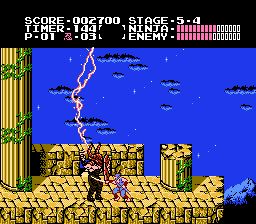
In 1988, Ninja Gaiden set the standard for the NES with its ninja narrative, groundbreaking cutscenes, six action-packed levels, and adaptations for Master System, PC-Engine, Game Boy, and other platforms.
Developer Tecmo Publisher Hudson Soft, Tecmo
In 1988 within Tecmo's premises, two teams worked on creating two different games featuring the same protagonist. One was a beat-'em-up for arcades, the other an action game for the NES. Both games would share the same name, but while the first would soon fade into obscurity, the second would launch what would become one of the most iconic series of Nintendo's 8-bit era: Ninja Gaiden.
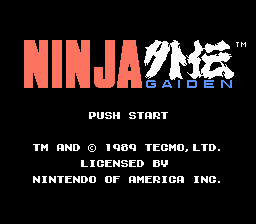
At the helm of what would become the most famous ninja in video games alongside Sega's Joe Musashi, Ninja Gaiden begins with Ryu Hayabusa, a young ninja, who learns of his father Ken's death through a letter, urging him to arm himself with the family sword and travel to the United States to contact an archaeologist named Walter Smith. The first major surprise of the game is that this introduction isn't simply provided to the player in the manual or on the game's box, but is a full-fledged cinematic sequence, starting with the final duel between Ken and his mysterious adversary, which unfolds upon inserting the cartridge to illustrate it.
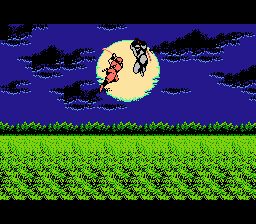
This use of cinematics would become a hallmark of the series, and in fact spans the entire game, as the entire story of Ninja Gaiden is presented in this form. Throughout the 6 levels that make up the game (each divided into several sections and culminating in a boss), the game features a total of 19 minutes of cinematics in the form of still screens and sometimes even animated sequences. A true innovation for its time, which remains a very successful achievement to this day.
For example, discovering the temple in the middle of the game and the cinematic sequence accompanying it has lost none of its elegance and intensity since its release, thanks to the refined staging.
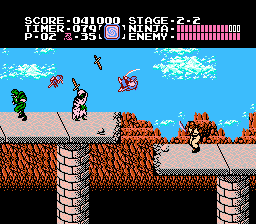
The 6th and final level, and in particular segment 6-2, is truly a trial for the inexperienced player discovering it, as it is filled with projectile enemies and the most treacherous drop-offs in the game. Once the joy of finally reaching the boss in the last segment has passed, dying at this point (and this will happen more than once...) forces the player to restart the entire level from the beginning, putting their nerves to the test.
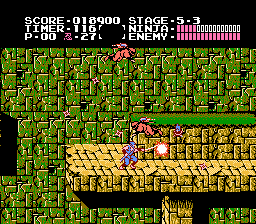
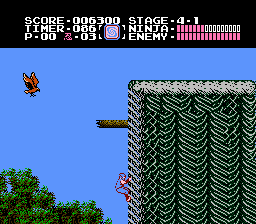
However, despite all the frustration the player may feel at times, it is fair to acknowledge that Ninja Gaiden always provides the means to overcome these challenges, as continues are unlimited and the segments of the different levels are ultimately not very long. Through experience, what seemed impossible at first gradually becomes more manageable. Moreover, with its cinematics, Ninja Gaiden is never stingy when it comes to rewarding the player who makes the effort to progress, especially since the story knows how to be engaging. Finally, the fast-paced gameplay that Ninja Gaiden demands of the player becomes particularly enjoyable once mastered, with the ninja effortlessly spinning and slashing through a rarely interrupted stream of enemies with a certain grace. The game's soundtrack is also particularly well-done, rhythmic and catchy during the levels, more laid-back during the cinematics—it is undoubtedly one of the great soundtracks of the NES.
Ninja Gaiden is not without its minor flaws. The backgrounds are detailed, sometimes too much so and not always very readable, Ryu cannot climb walls that lack a ladder, and may thus find himself stuck on a wall with the only alternative being to jump into the void, which might seem a bit silly for a ninja of this caliber.
Developers aware of these limitations will address them in the next installment, and it must be admitted that this does not hinder the overall enjoyment of the game at all.
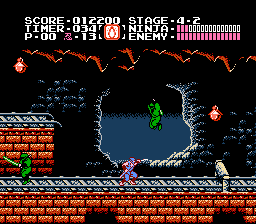

Ninja Gaiden will see two sequels on NES, the first, Ninja Gaiden 2: Sword Of Chaos, will almost exactly replicate the formula of the first game, removing the few gameplay quirks and adding the ability to use clones, while the second, Ninja Gaiden 3: Ancient Ship Of Doom, will seek to differentiate itself by deeply modifying the original gameplay and changing the setting, though the result is somewhat less impressive.
Ninja Gaiden will also see several ports (Amiga, PC-Engine, Amstrad CPC, ...) and original adaptations on other platforms (Master System, Game Gear, GameBoy). Then, the series will make a notable comeback in 2004 on Xbox, in a 3D episode that, against the trend of current productions, will retain the legendary difficulty of the series.
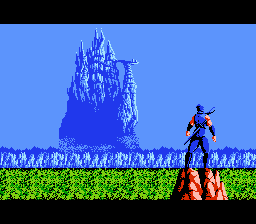
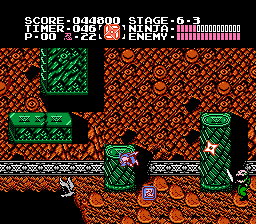
Ninja Gaiden is a game that divides players: some will find its challenge a formidable but extremely motivating test, while others will be completely deterred by its difficulty. In any case, Ninja Gaiden will leave no one indifferent, as aside from its difficulty which may be controversial, it is undeniable that Ninja Gaiden achieves near-perfect execution that few games can claim: tense gameplay, frenetic action, grand staging, and superb music. An explosive cocktail that takes time to fully appreciate, possibly to be momentarily disliked, but one that is not easily forgotten: the mark of great games...
Where it fits in time
The whole timelineWhat came out and what happened around 1988.
-
Steve Jobs leaves Apple
After the power struggle with John Sculley, Steve Jobs leaves the company he co-founded and founds NeXT.
-
Atari 7800
Console de salon · Atari
-
SoftPC runs the PC on the Macintosh
Insignia Solutions brings its x86 emulator to the Mac: DOS and Windows reach Apple machines through software emulation.
-
Sharp X68000
Computer · Sharp
-
NeXTcube
Computer · NeXT
-
Mega-Tech
Arcade · Sega
Play it on a Mac
1 Platform emulator
Show the 85 other emulators
An emulator being listed does not mean the game runs: every project keeps its own compatibility list.
Reply on the forum
A question or a hands-on report? Open the discussion on the forum.