Crazy Cars 3
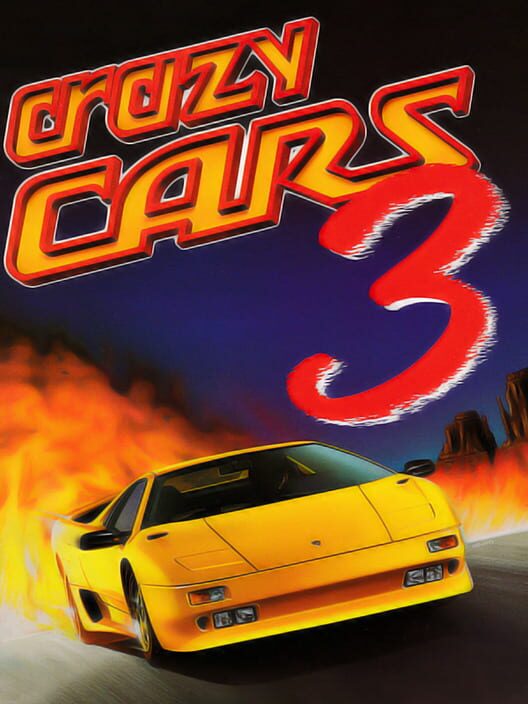
In 1992, Crazy Cars 3 left behind long highways for Lamborghini Diablo races on a single track, available on eight platforms, including the Super Nintendo and MS-DOS.
Developer Titus Interactive Publisher Titus Interactive
Today, I’ll talk to you about a retro-test that’s a bit different. I’ll obviously discuss a game that marked my youth as a player, but unlike usual, it won’t be because I know the game inside out, but for other reasons...
Like Marty McFly, let’s go back in time for a moment...
1994, Titus, a French publisher, announced Crazy Cars 3. After a first disappointing episode released in 1988, and a second even more disappointing one in 1992, I was eagerly awaiting this third installment, as it was one of the rare series released for Macintosh.
As the game was about to be released, I still remember proudly buying my copy of Génération4 talking about Crazy Cars 3, and especially the famous diskette that came with it, featuring demos of the games. While the diskette was usually compatible with Amiga, Atari ST, DOS, and Mac, what a surprise it was to see that there was no Mac session on this diskette. And it was by reading the article dedicated to the game that my disappointment was the greatest... no Mac version was planned.
Today, more than 25 years later, I set aside my frustration to finally launch the game for the very first time.
For this third episode, we completely change the format! To start, we leave the Ferrari F40 behind, for its direct Italian rival, the Lamborghini Diablo.
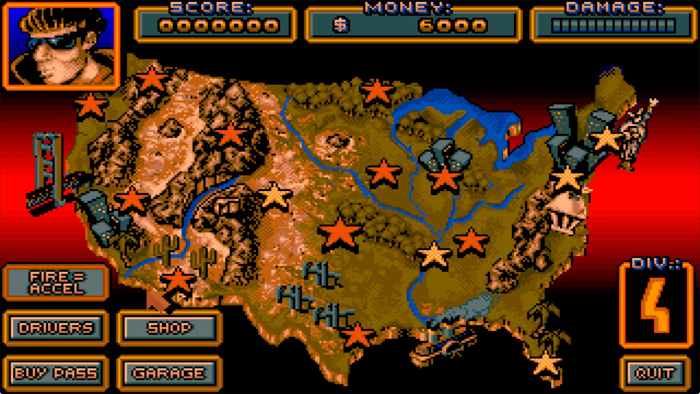
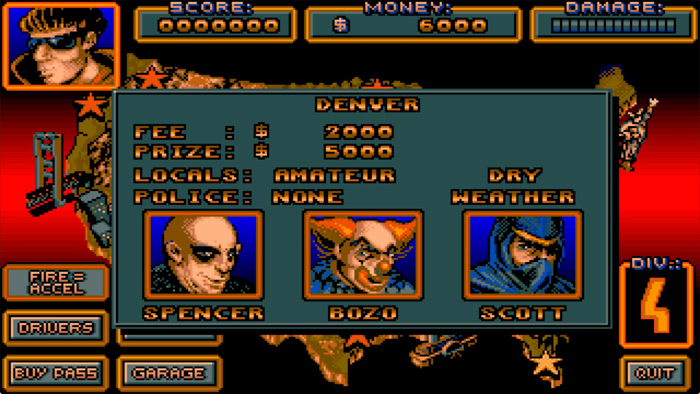
Next, it’s no longer a single long race, but a multitude of them, still taking place in the heart of the United States. There’s no need to study the map to find the optimal route, as it’s now all about runs on a single, unique lane.
Finally, no more long drives on endless, deserted highways. What had been the sharpest criticism of Crazy Cars 2 is now just a thing of the past. We still cross the famous police car that tries to stop us, but it’s no longer alone.
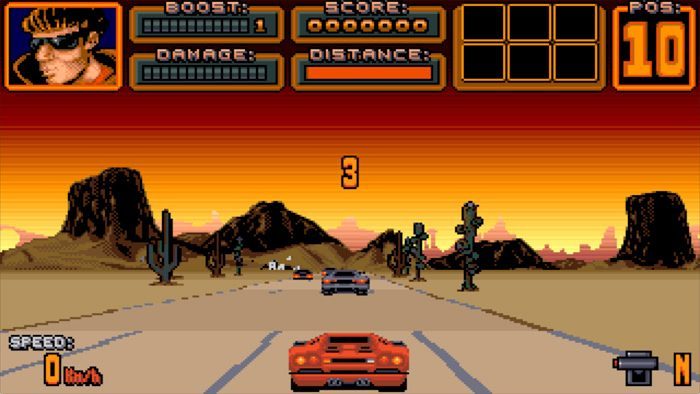
In addition to having several police cars, there are now our opponents, but we can also rely on heavy traffic to slow us down.
The races are therefore a bit more challenging, especially since a damage meter has been introduced, which tends to rise quickly with every little bump our vehicle might make against the scenery or other road users.
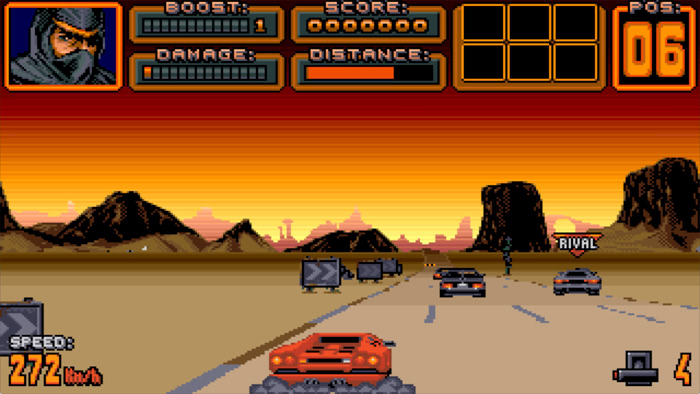
At the end of the race, you'll need to spend your hard-earned money to repair your beautiful Italian car. Another new feature in this third installment is that money can also be used to upgrade your Diablo with various performance parts.
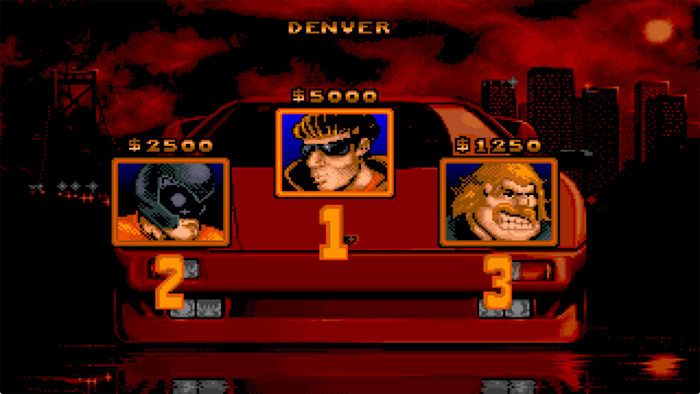
The races increase in difficulty, with rewards also becoming more substantial. A nice touch: in addition to the victory bonus, you can place bets with your most notable competitors to win a slightly larger stake.
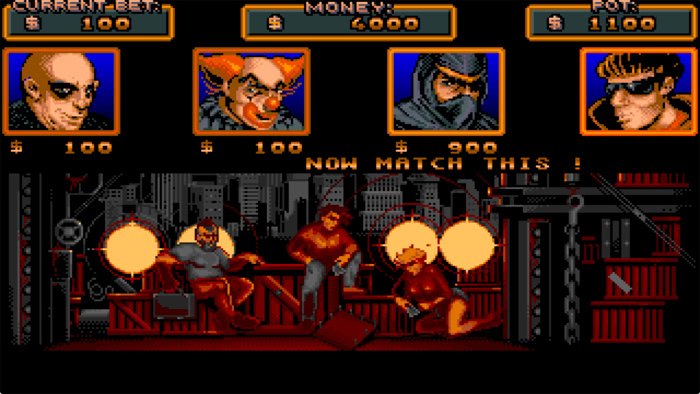
Overall, Crazy Cars is true to my old expectations; it contains exactly what we hoped for and expected from a racing game. The disappointment is therefore even greater for not having experienced it on our beloved Macintosh back then. It remains enjoyable to play today, even though, like its predecessors, it is extremely repetitive and doesn’t encourage reaching the end of the game.
Two years after the release of Crazy Cars 3, Titus obtained the official Lamborghini license and released Lamborghini American Challenge. The game is very similar to CC3, with a few details changed; the only major novelty is the addition of a split-screen two-player mode. However, the license allows it to compete with the Lotus Esprit Challenge series, contemporary to Crazy Cars, created by Gremlin. Worth testing for a future retro-test!
Where it fits in time
The whole timelineWhat came out and what happened around 1992.
-
System 7 modernises the Mac
Virtual memory, file sharing, AppleScript: System 7 is the first major overhaul of the Macintosh system.
-
Amstrad NC
Computer · Amstrad
-
Executor, the Mac on a PC
ARDI releases Executor 1.0: a 68k emulator that reimplements the Macintosh Toolbox rather than the hardware.
Play it on a Mac
1 Platform emulator
Show the 72 other emulators
An emulator being listed does not mean the game runs: every project keeps its own compatibility list.
Reply on the forum
A question or a hands-on report? Open the discussion on the forum.