Tales of Phantasia
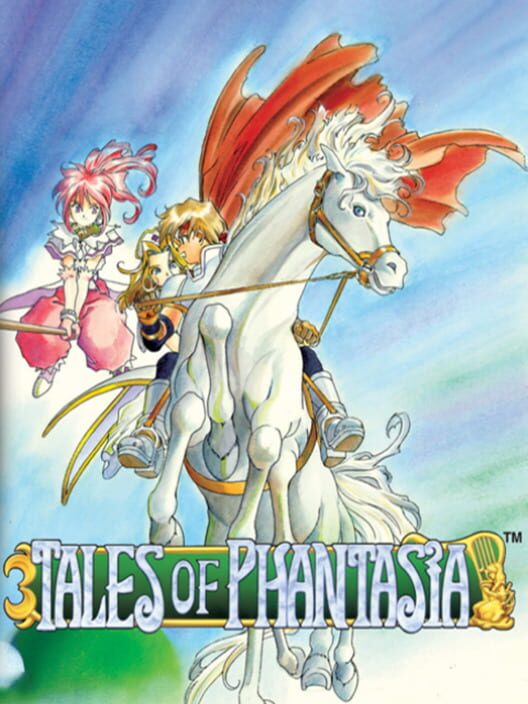
Released in 1995 for Super Nintendo, Tales of Phantasia established Wolfteam as a bold RPG developer, renowned for its real-time combat, its sung introduction, and its technical execution.
Developer Wolf Team Publisher Namco, Nintendo (hors Japon)
Hard to make a name for yourself in the console RPG universe, especially when coming mainly from the arcade (even though you produced titles like Dragon Buster or Megami Tensei). But when you're offered to publish a gem, you shouldn't miss out.
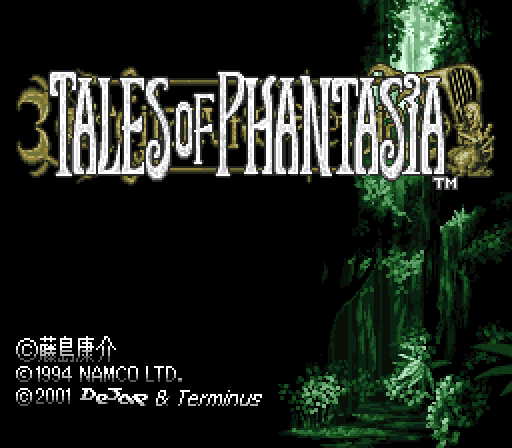
Little known to the general public, the development studio Wolfteam embarks on an ambitious project called Tale Phantasia. To ensure the sales of such a work, the team sought a reputable publisher. While Enix’s name circulated, it was Namco that signed the contract. The latter imposed some modifications, including a name change for the game, a delayed cartridge release by a year, and part of the collaborators left the company to found Tri-Ace.
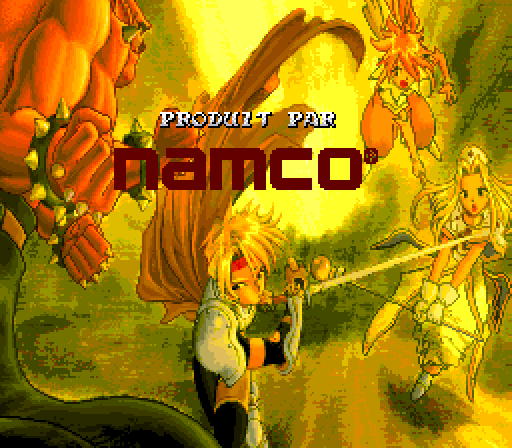
Thus, Tales of Phantasia was released in 1995, the same year as Chrono Trigger, or Seiken Densetsu 2, and one year after Breath of Fire II and a certain Final Fantasy VI. It was already difficult for an RPG to stand out from these franchises that had stamped their seal on the genre and leave its own mark, especially for a first attempt. And yet, no suspense, Tales of Phantasia succeeds brilliantly.

The entire technical mastery of the developers is summed up in the game's introduction. While our eyes widen at refined graphics and an automatic battle revealing a distinct style, with rather pleasant spells and attacks, it is the sung music that will surprise our ears, unaccustomed to such a wonder coming from the SNES (this feat had already been achieved in another game).
This magnificent introduction, heralding undeniable quality, ends with a small demonstration of Mode 7, which turns out to be a bit lengthy, featuring zooms and rotations as the credits roll.
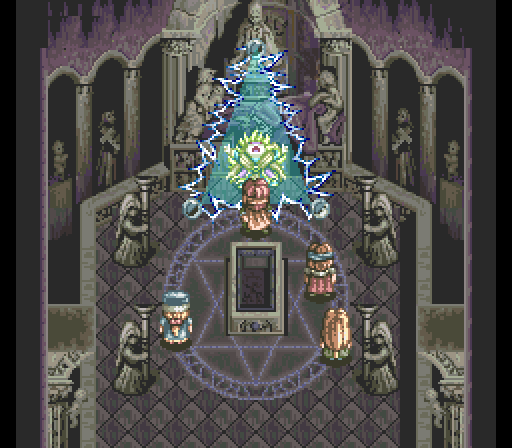
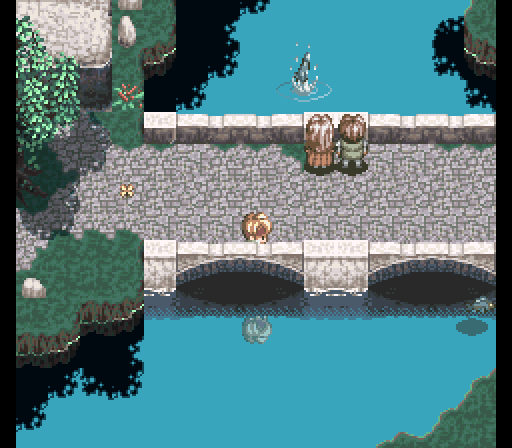
At the beginning, four heroes manage to thwart the plans of a certain Dahos and imprison him in a powerful spell. Time has passed, and you take on the role of a young man named Cless Alvein, who will turn out to be the main character. The young boy, son of a weapons master, temporarily leaves his village to hunt in the nearby forest with his best friend and archer, Chester. Their hunt for game leads young Cless to a tree that appears to be dead, from which a fairy emerges, pleading with him to protect the tree. Suddenly, a boar emerges from the bushes, and the hunt begins. The young trappers don't have time to celebrate their success when the village bell, foretelling misfortune, rings out. They must therefore return to the village at full speed.
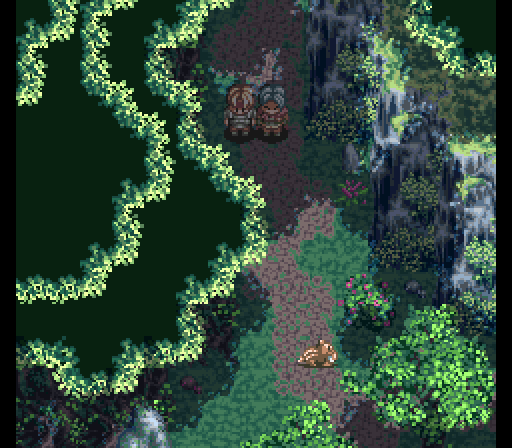
If the presentation of the plot doesn't go any further, it's because the latter has genuine interest and a maturity quite rare for a Japanese role-playing game. Without reinventing the genre, and the protagonists, for the most part (except one), being young people entering adulthood, this RPG is far less sugary-coated than most Japanese games. You easily get hooked on this story that hints at some of its illustrious predecessors. The main quest captivates and transports you into a vast world that can be explored entirely on foot or by air or sea in a stunning Mode 7.
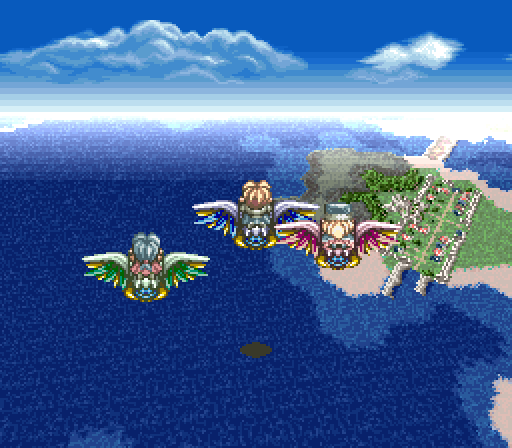
The whole experience is elevated by refined graphics with pastel tones, giving a melancholic touch that perfectly matches the atmosphere. The music, for the most part, is magnificent, enhancing the emotions conveyed.
The sound effects are of excellent quality, and you will particularly appreciate the digital voices of the various protagonists during combat. The facial expressions of the characters and their well-developed personalities make each of them touching. Your party can consist of five adventurers. However, only up to four, chosen by you, will be able to fight. But be aware that some chapters of the story will require you to temporarily abandon certain members of your party.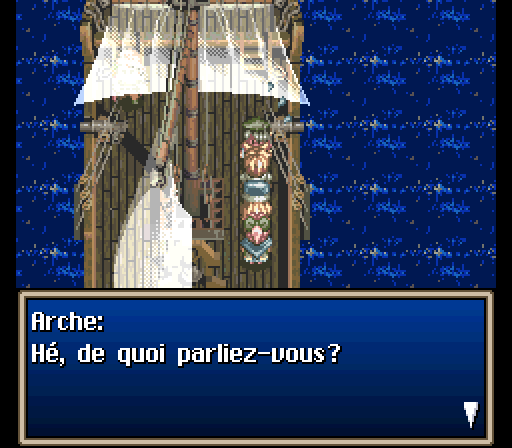
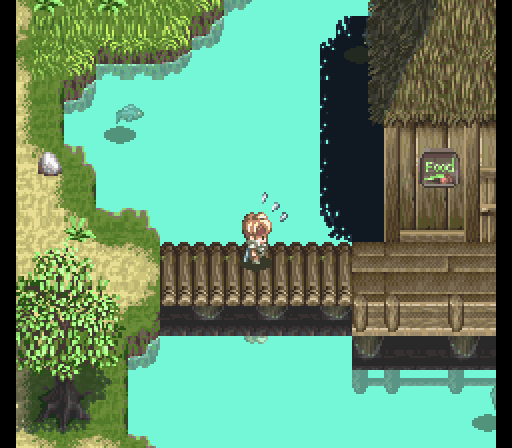
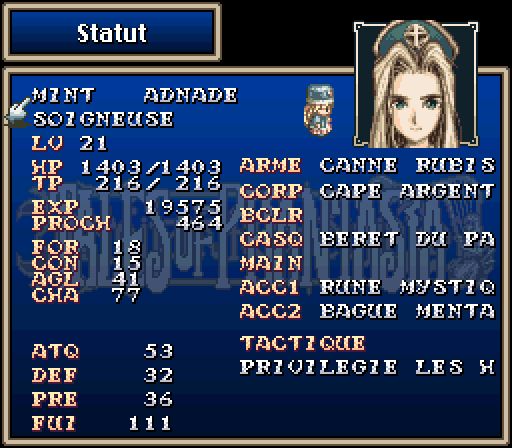
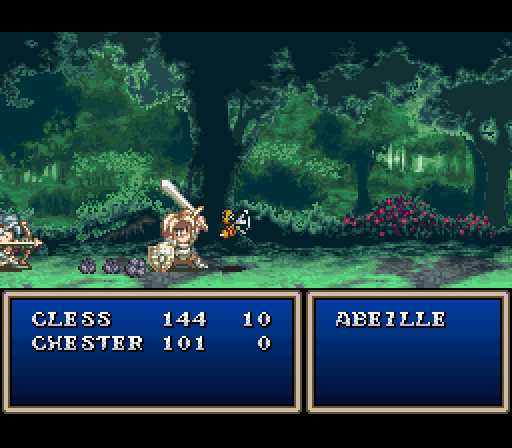
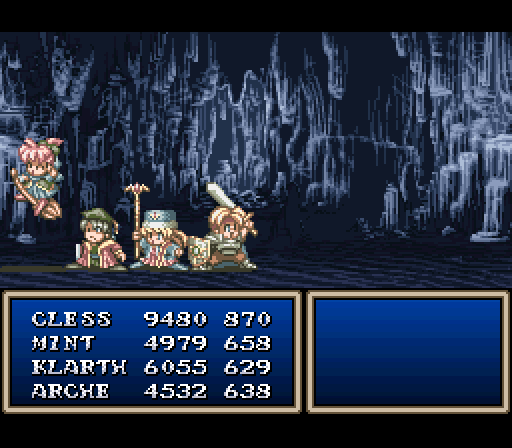
Let’s focus on what makes this game unique: its battles. These are real-time. You will control the first character in the formation you have pre-set, while the others are managed by artificial intelligence. Thus, you won’t have to control Cless. The combat tactics defined before engagement can be modified during hostilities. There are four possibilities in total, which is enough, but amateur tacticians may regret there aren’t a few more. Specifying a particular type of attack or magic to execute would have been wise, as during indecisive duels, it can be frustrating to see your invoker use magic known to be ineffective. Even though each character remains controllable via the menu, this may cost you precious seconds during intense battles. Your survival instinct will undoubtedly push you to flee a fight; for this, you’ll need to send your hero to the edge of the battlefield and wait for the meter to grant you the right to retreat.
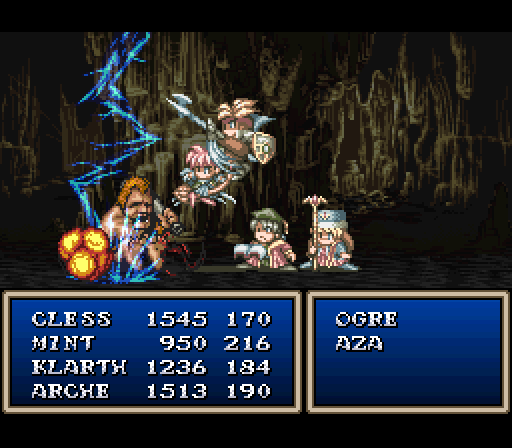
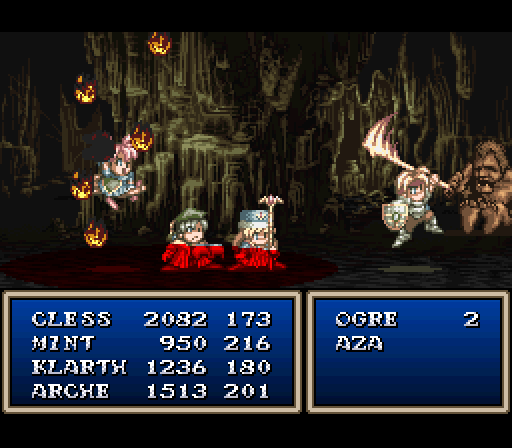
No doubt that most of the time, you will control Cless. You will then have to deal the various blows yourself to your adversaries. Like any proper role-playing game, special techniques—each more devastating than the last—can be learned as you progress. Just like magic, these can be bought or taught for free and will use points called TP. Tactics can sometimes be combined, becoming devastating for your opponent. This kind of fusion will only be possible once the base techniques that compose it are fully mastered.
All this equipment will be useful as some enemies are incredibly difficult to defeat, often requiring you to define an attack order, making battles lengthy, if not dangerous for the group's physical integrity. This will prove essential against formidable foes.
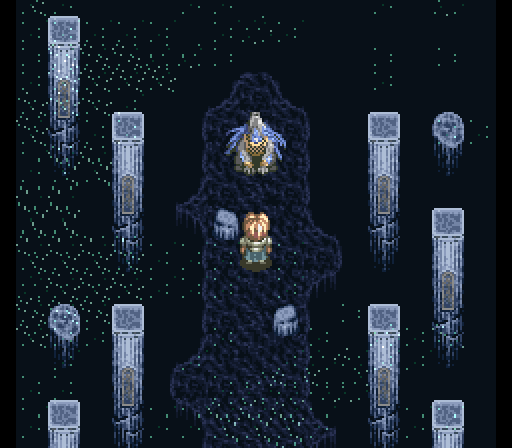
This Super Nintendo version is a complete success, with flawless overall execution both technically and artistically. The world is rich, and you get carried away by the simple magic of the plot, despite sometimes increased difficulty. This game is a masterpiece, and there is very little to criticize about this edition except that it has never left the shores of the land of the rising sun, just like the PlayStation version, released three years later, which improved the graphics and added animations and small scenes that do not alter the original spirit in any way. To enjoy a localized version, you will have to turn to the re-release on Game Boy Advance, which includes an additional dungeon, a version that itself was re-released on PSP with additional 3D effects but without the bonus dungeon.
Where it fits in time
The whole timelineWhat came out and what happened around 1995.
-
CPS Changer
Console de salon · Capcom
-
Basilisk II opens up the 68k Mac
Christian Bauer’s free emulator brings 68000 Macintoshes back to life on other machines, ROMs and System 7 included.
-
CP System III (CPS3)
Arcade · Capcom
-
Apple buys NeXT
Apple acquires NeXT for $429 million. NeXTSTEP becomes the basis of Mac OS X, and Steve Jobs returns.
Play it on a Mac
1 Platform emulator
Show the 36 other emulators
An emulator being listed does not mean the game runs: every project keeps its own compatibility list.
Reply on the forum
A question or a hands-on report? Open the discussion on the forum.