Super Mario RPG: The Legend of the Seven Stars
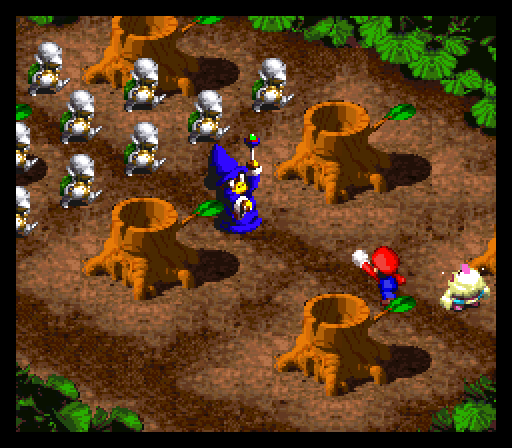
Released in 1996 for the Super Nintendo, Super Mario RPG: The Legend of the Seven Stars blends turn-based combat with interactive adventure, pitting Mario and his allies against a giant sky-bound sword.
Developer Square Publisher Nintendo
Super Mario RPG: Legend of the Seven Stars is a role-playing game featuring the famous mustachioed plumber from the SNES. Developed by Squaresoft (now Square Enix) and Nintendo, it was released in 1996 exclusively in Japan and North America. Despite its popularity, the game was never released in the European market. It is worth noting that it was, at the time, the first RPG in the Mario series.
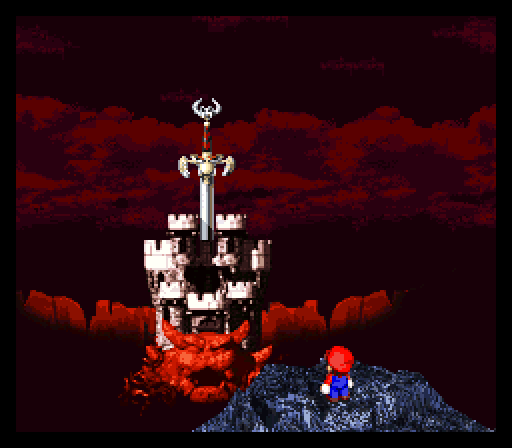
The story begins when the princess is kidnapped by the villain Bowser. And yes! For the nth time, Mario must rescue the princess. Once saved, a massive earthquake expels Bowser, Mario, and the Princess from the castle. They end up scattered across the world map. The earthquake was caused by a giant sword fallen from the sky, taking over the world. Mario must therefore, through multiple adventures, find the princess and defeat this extraterrestrial sword. Talk about a plot!
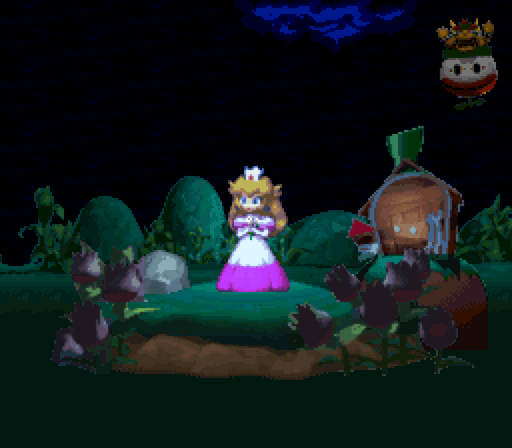

Of course, Mario is not alone in this story. Along the way, he will meet other characters who will join his team. And of course, some friends from the Super Mario universe like Yoshi, Toad, Koopas, Goombas, and carnivorous plants are also part of this wild and super adventure.
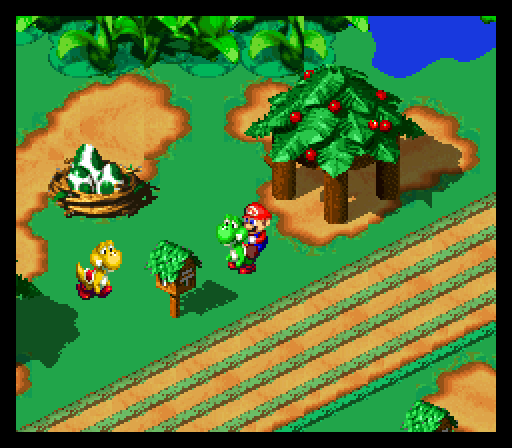
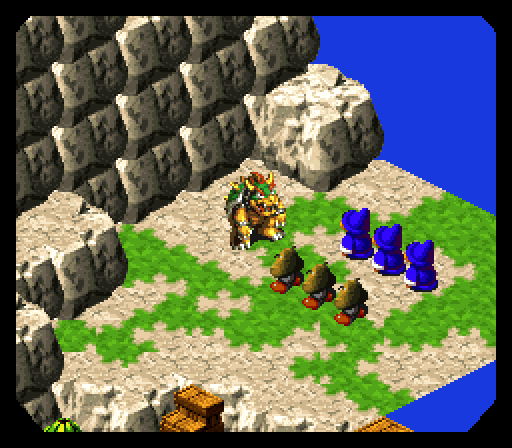
The combat system is interactive and unique for its time. Each attack can be enhanced by performing a few actions on the gamepad. For example, you can make the hammer strike a second time by pressing the "A" button at the precise moment or continuously pressing "Y" to fire as many fireballs as possible at the enemy. Each character has their own attacks and techniques. Like many role-playing games, items play a crucial role in combat. Mario and his friends must, among other things, eat mushrooms to restore their hit points and drink maple syrup cans to replenish their magic points (Magic Points). The team worked hard on the graphical side. Super Mario RPG is one of the three games on the Super Nintendo to use the Nintendo SA-1 (the other two are Kirby Super Star and Kirby Dream Land 3). This is a microprocessor that, among other things, allows for a higher "clock speed," faster RAM, greater data capacity, and compression. The game's presentation is not top-down like most other RPGs nor side-scrolling like in the classic Super Mario Bros. Instead, Super Mario RPG uses an isometric view, giving a 3-D perception to a 2-D game. All characters are also built with pseudo-3D sprites. The music perfectly matches the game's childlike and naive atmosphere. It was composed by the talented Yoko Shimomura. Several themes from Super Mario Bros (composed by Koji Kondo) and a few tracks from the Final Fantasy series (composed by Nobuo Uematsu) are reused and rearranged. I had the chance, as a child, to play this wonderful game on the Super Nintendo. Despite its availability only in English and my young age at the time, I still managed to understand and feel the interaction between the characters and the story. The gameplay is superb, the graphics push the SNES to its limits, the music is enchanting, and the story, sprinkled with a bit of humor, is exactly what one expects from a game signed by Nintendo and Squaresoft. I hope to have succeeded in whetting the appetite of those who couldn’t experience this game because they were living in Europe. For those who don’t understand English, be aware that there are now available "patches" to play it in French.
Where it fits in time
The whole timelineWhat came out and what happened around 1996.
-
CPS Changer
Console de salon · Capcom
-
Basilisk II opens up the 68k Mac
Christian Bauer’s free emulator brings 68000 Macintoshes back to life on other machines, ROMs and System 7 included.
-
Apple buys NeXT
Apple acquires NeXT for $429 million. NeXTSTEP becomes the basis of Mac OS X, and Steve Jobs returns.
Play it on a Mac
1 Platform emulator
Show the 14 other emulators
An emulator being listed does not mean the game runs: every project keeps its own compatibility list.
Reply on the forum
A question or a hands-on report? Open the discussion on the forum.