Heroes of Might and Magic : A Strategic Quest
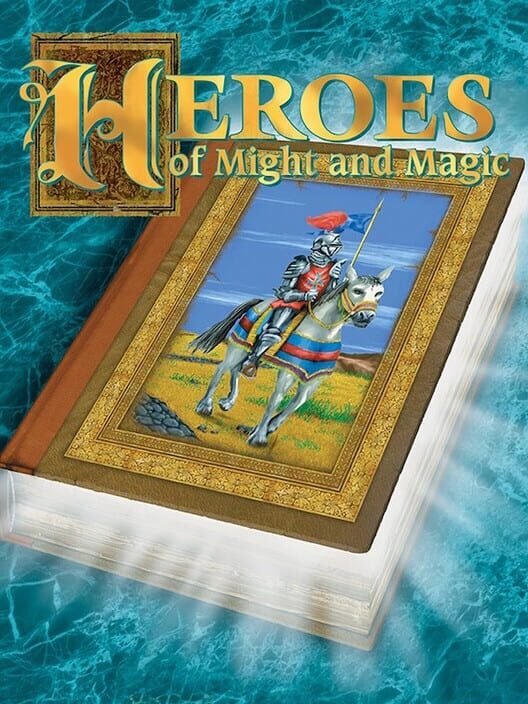
In 1995, Heroes of Might and Magic combined turn-based strategy, resource management, and role-playing elements with exploration, army recruitment, and territorial conquest.
Developer New World Computing Publisher New World Computing
The most seasoned digital role-players are certainly familiar with the Might & Magic license. It was in the mid-1990s that New World Computing decided to capitalize on this famous saga from the 1980s to create its turn-based strategy game.
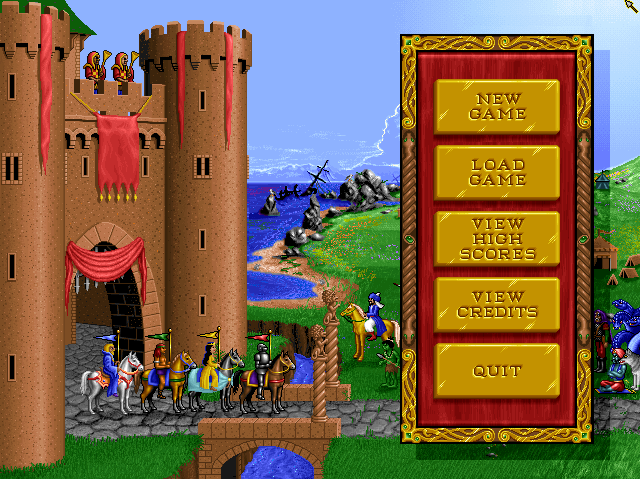
Thus, Heroes of Might and Magic was born in 1995, aiming to be a fresh title at the intersection of strategy, management, and role-playing in a well-known heroic-fantasy universe.
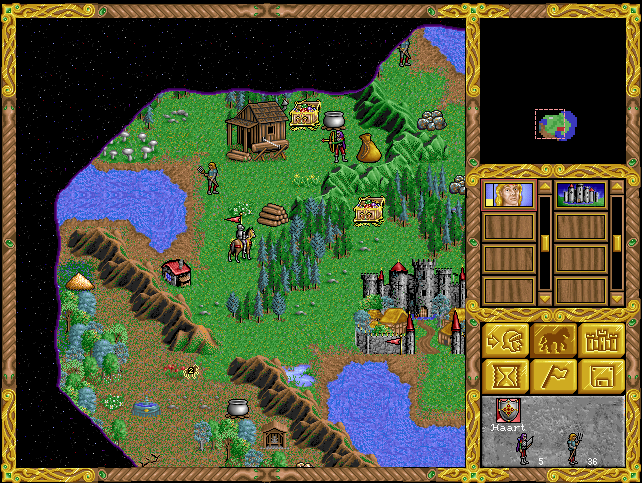
This title offers you the chance to embody one of the four lords whose mission is to eliminate the competition and take control of the map.
To achieve this, you will need to recruit heroes and assign them your troops so they can traverse the continent and seize control of raw material mines, which will supply your various needs. These resources are the backbone of war, as there can be no advancement without these precious goods.
To raise an army, you will obviously need gold, and the best way to obtain it is through the number of castles or villages under your control. Thus, you will need to attempt to take nearby strongholds by force while also defending those you have already acquired.
If the goal is to expand until total victory, this will require good management on your part between exploration, to find new resources sometimes protected, combat to gain new territories, and spending to grow your army or improve your production.
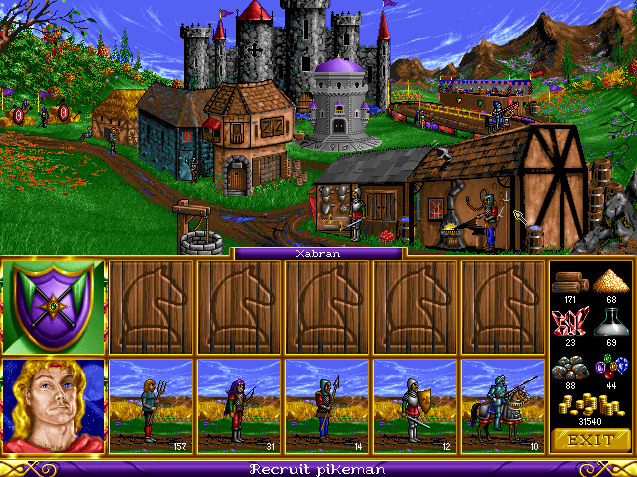
The first logical step is to discover the surroundings and acquire as many production mines as possible while eliminating wandering monsters that allow your heroes to gain experience, and try to identify enemy strongholds if possible.
The heroes are therefore the central characters of this game, as the name suggests, and are recruited, like any valiant and preux knight or wise and cultured mage, at the tavern.
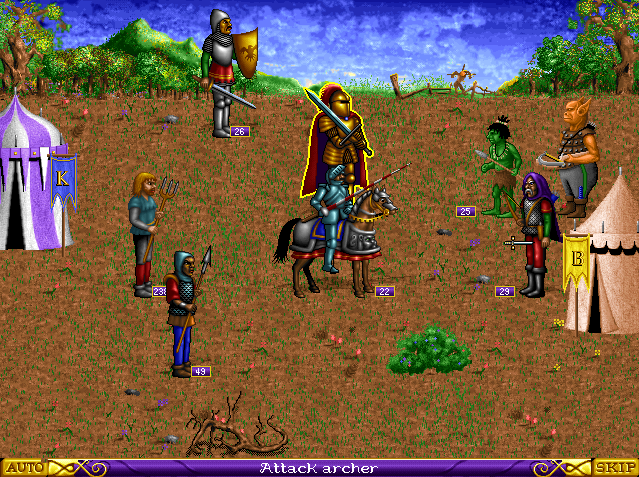
Each hero has unique traits tied to their class, so a warrior will find it easier to inspire their troops in battle than to cast powerful and destructive spells, which are more suited to a sorcerer. These values will evolve over the course of battles through the gain of experience points proportional to the strength of the defeated army. The hero, representing the leader of the troops you have entrusted them with, directly influences the soldiers. While numbers will certainly make the difference, a small battalion under the command of an experienced general, combined with a refined strategy, will have a chance to overcome some difficult situations. You will soon realize that having decorated heroes and the largest possible army ensures a final victory. However, not all units are equal; some, despite being numerous, will not have the same combat power as a smaller but more battle-ready force. Understand that a horde of peasants will easily be decimated by just a few knights.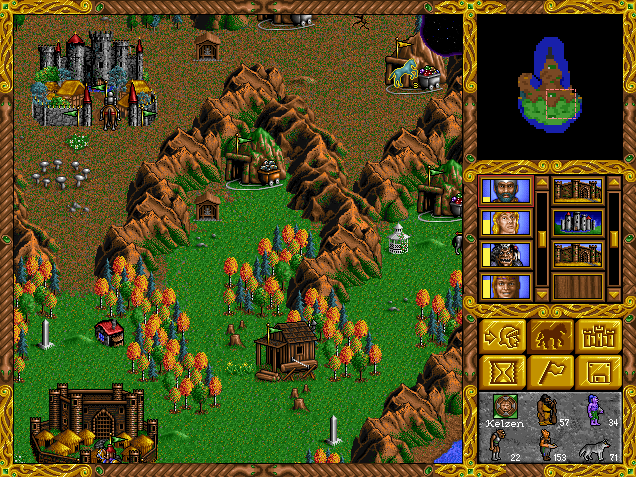
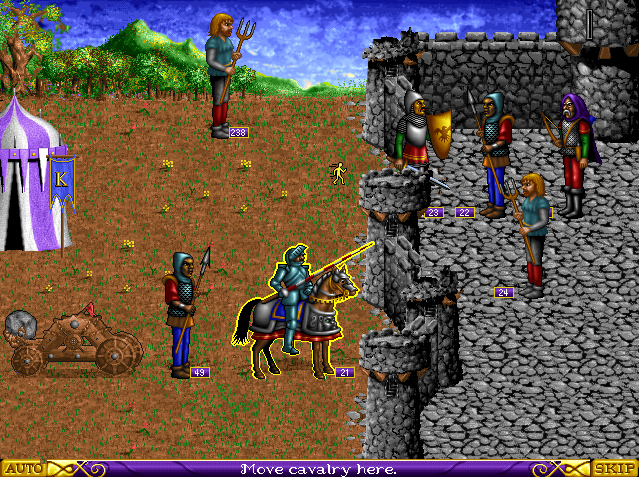
A well-managed mine, combined with an experienced hero commanding powerful and numerous troops, will remain the best way to win, especially by taking advantage of battles between two weakened opponents that significantly weaken the victor.
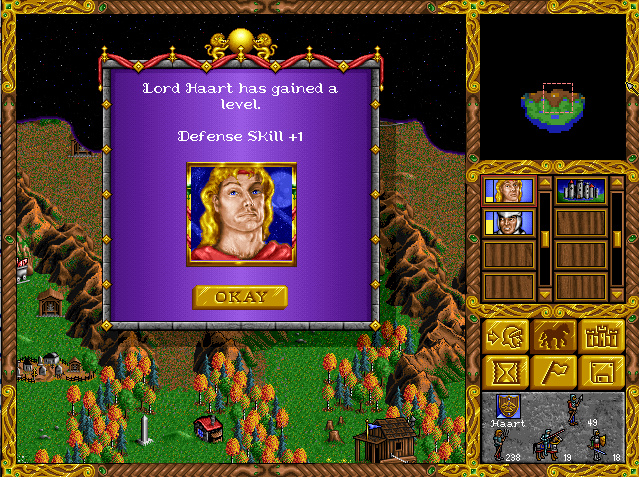
While the game allows for up to four players, the internet not being available in every household and multi-computer networking, still quite portable, limited to what were called LANs, face-to-face confrontations between flesh-and-blood sovereigns often take place on the same machine. Although the turn-based theme suits this well, the ability to watch the opponent's screen over their shoulder forces players to establish some physical rules between strategists to maintain fairness during the game.
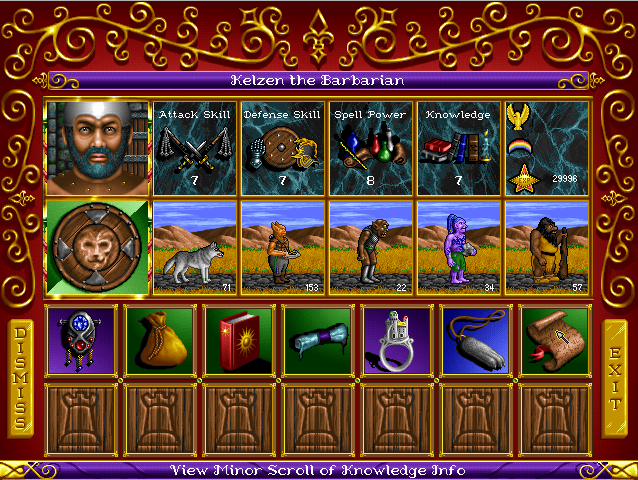
The graphics are quite detailed and correct, with a preference for a display that clearly identifies each map element, with or without the associated camp colors. Similarly, animations are very minimal. The game truly shines during combat phases, featuring imposing monsters and significantly more animations. However, the limited size of the battlefield also simplifies the tactical aspect.
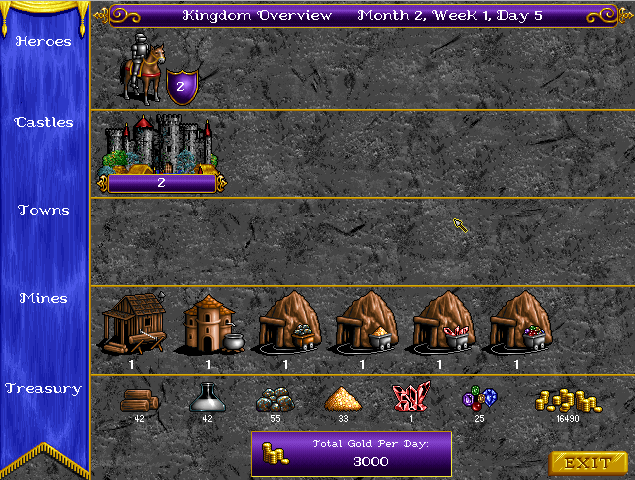
Musically, while there are a few tracks for different phases in the game, they are mostly short and ultimately rather unremarkable, but you can always say it's better than hearing the same ones on loop.
The soundtrack remains a bit more refined, adding a certain atmosphere to the game, whether during battles, movements, or the management of castles.
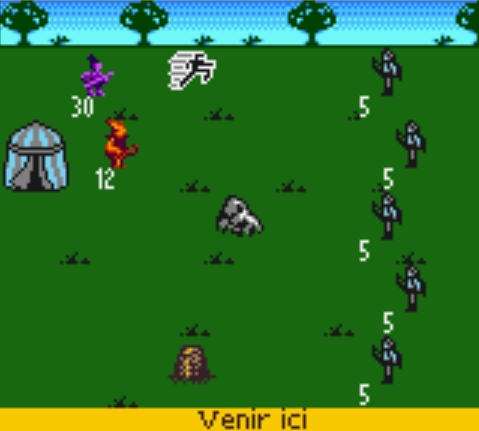
The port for the Game Boy Color in 2000 is, of course, technically inferior to the original, especially in graphics, but it still has some quite impressive qualities given the machine's power, even if the somewhat austere ergonomics may easily deter some players.
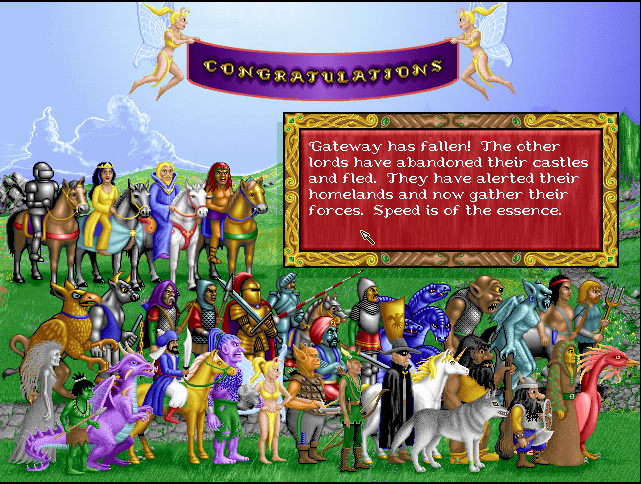
Heroes of Might and Magic, despite a few minor flaws from its early days, ultimately proves to be a successful game that chose to blend different genres to become unique. It does not require the player to necessarily be a great strategist but to have at least some tactical sense, nor does it force them into complex and detailed management of their kingdom, but rather wise and straightforward oversight. It remains a singular and enjoyable experience that can quickly become addictive, even though some mechanics have not aged very well today, thanks to an ergonomics and gameplay that remain entirely accessible.
Where it fits in time
The whole timelineWhat came out and what happened around 1995.
-
CPS Changer
Console de salon · Capcom
-
Basilisk II opens up the 68k Mac
Christian Bauer’s free emulator brings 68000 Macintoshes back to life on other machines, ROMs and System 7 included.
-
CP System III (CPS3)
Arcade · Capcom
-
Apple buys NeXT
Apple acquires NeXT for $429 million. NeXTSTEP becomes the basis of Mac OS X, and Steve Jobs returns.
Play it on a Mac
1 Platform emulator
Show the 55 other emulators
An emulator being listed does not mean the game runs: every project keeps its own compatibility list.
Reply on the forum
A question or a hands-on report? Open the discussion on the forum.