Seiken Densetsu III (Secret of Mana 2 ou Trials of Mana)
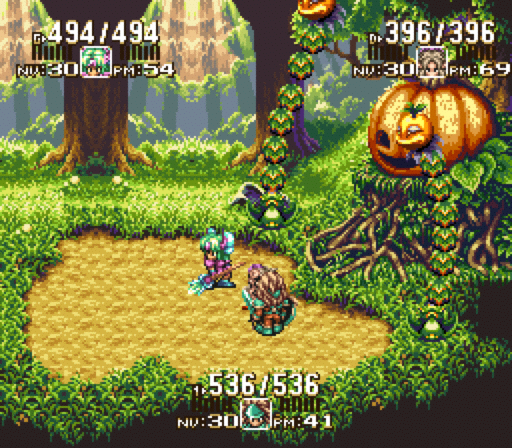
Released in 1995 for Super Nintendo and later on Switch, this role-playing game offers six heroes, customizable parties, and three interconnected storylines tied to the choice of the main character.
Developer Square Publisher Square
What makes a saga famous is its ability to constantly renew itself and offer new content without ever altering the original essence of the series. In this regard, Seiken Densetsu 3 (translatable as Secret of Mana 2 or Trials of Mana) is one of those highly anticipated yet feared sequels.
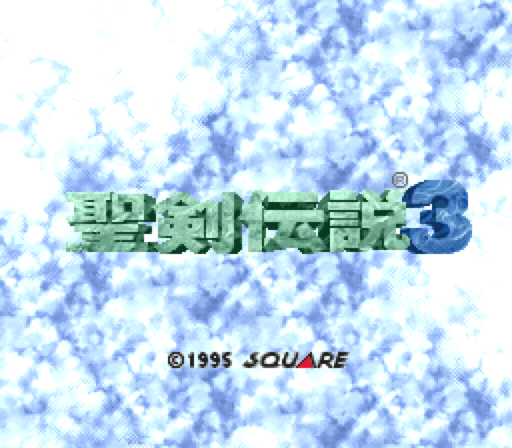
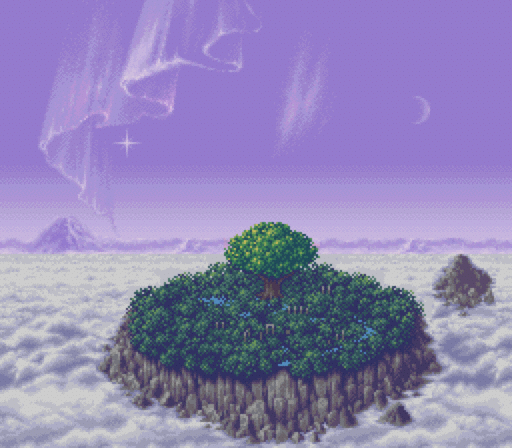
It’s hard to know where to begin when discussing this work. Let’s start with what players see upon launching the program. The introduction displays a scrolling text recounting the origins of Mana over a gradient-colored background. This is followed by an overview of the island in 7-bit mode up to the mythical tree, ending with a quick scroll of clouds, again with a progressive gradient, simulating fast flight with sparkling lights, all accompanied by the revised musical theme of Secret of Mana.
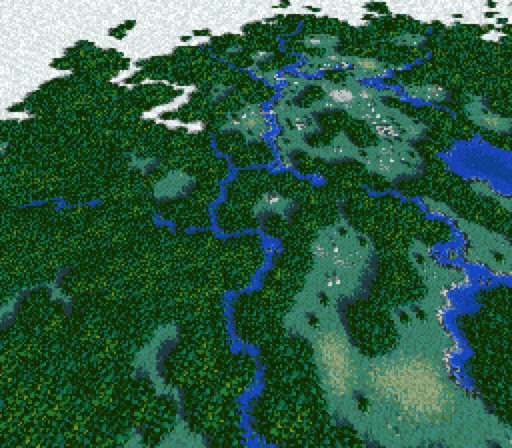
While not as powerful or restrained as that of Seiken Densetsu 2, these early scenes demonstrate the developers' intent to put all their skills into this sequel.
A first surprise awaits the player when they are offered to create a team of three characters from the six selectable ones. The team is no longer predefined. You get to choose the one you prefer. Of course, each character has its own attributes, but it is at this moment that you will choose your adventure. Indeed, while the general plot remains the same—saving the world of Mana—three scenarios are available and only reveal themselves based on the choice of your hero. In other words, the characters are paired two by two, resulting in three specific stories.
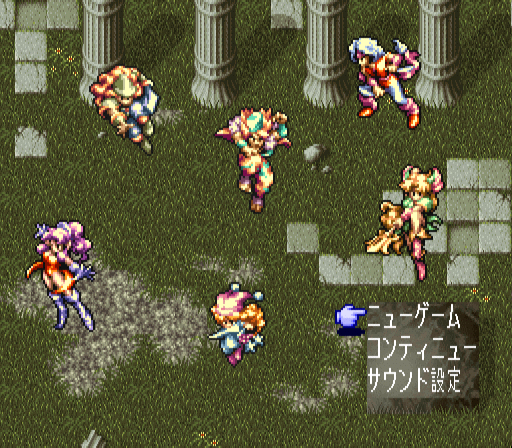
This does not mean that the choice of your two companions will have no importance. While they will bring their specificities to battles, their presence will also determine access or denial to certain areas of the world.
You will only begin your adventure with your main character, only to later reunite with your two companions.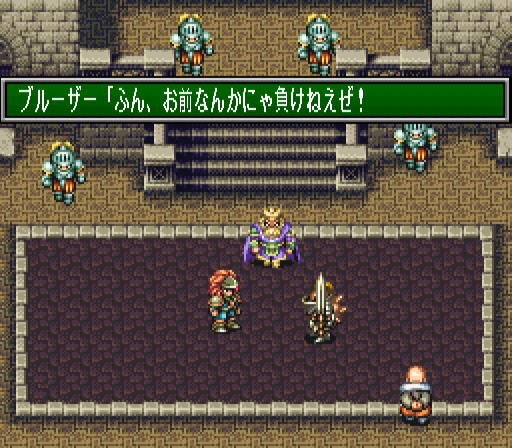
The six protagonists each have their own story, some deeper or better developed than others, with varying degrees of maturity and emotional impact. Yet, let’s not spoil the fun. Their fates intertwine, and you are in for an epic adventure as usual.
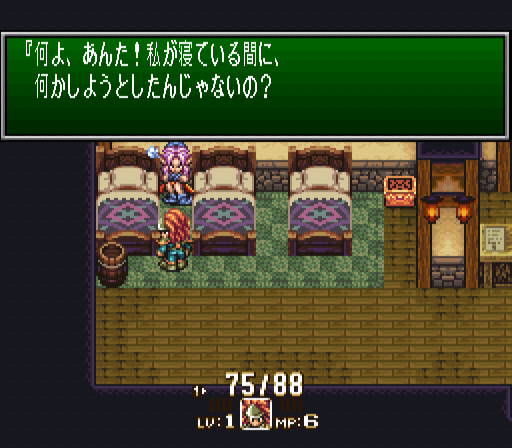
Moreover, each character has its own personality and expressive animations, brilliantly showcased through stunning graphics. The word is not overused; anyone familiar with the 16-bit era and the transition to 32-bit consoles cannot deny the beauty of Seiken Densetsu 3. The SNES fully displays its capabilities, turning every on-screen image into a masterpiece. Rarely do video game creations boast such enchanting and finely detailed backgrounds, especially since the characters, enemies, bosses, and magical effects match that level. It’s a true visual feast that Squaresoft invites you to experience, pushing the limits by using shading to manage a day-night cycle with real significance—particularly for a werewolf character. Similarly, the days of the week are also taken into account, as each corresponds to a spirit whose magic will naturally be more powerful during that period.

All this beauty is accompanied by numerous and magnificent music compositions, always orchestrated by Hiroki Kikuta. They have little to envy from the previous ones, but it is clear that the magic has less impact. As just and melodious as they are, the series fan, already prepared, is less surprised.
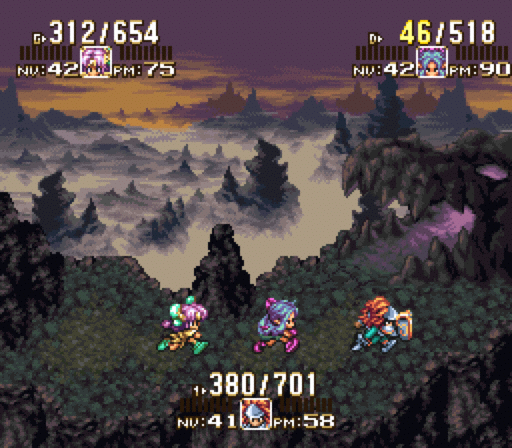
Is it necessary to remind you that the Seiken Densetsu series belongs to what is known as Action-RPG?
Regarding the last term, it is clear that a lot of work has been done to improve this aspect, which was often overlooked before.
Each character now has six attributes to develop as you see fit. There is no need to explain that depending on the ones you improve, the hero will be more or less powerful, enduring, sensitive to magic, or even lucky, especially when it comes to opening a booby-trapped chest. The novelty doesn’t stop there, since each protagonist can change class twice, allowing them to exceed the maximums of each attribute set by the previous class. Each time, you will have to choose between two possible professions. This choice is crucial for the future as it determines access to additional magics and special combat techniques. Each of them has a total of seven classes, with four distinct types in the end. This rich idea truly adds a role-playing dimension to this third installment.
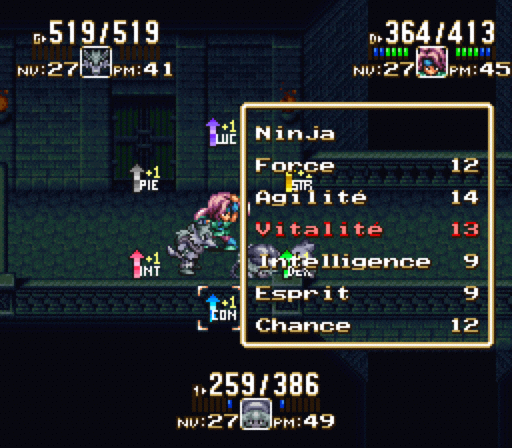
As for the action, the combat system has also changed. No more weapons to load and switch between combatants. It can be said that the system has been, in a way, simplified. Each protagonist has their own weapon style, which you can purchase to increase attributes as you encounter merchants.
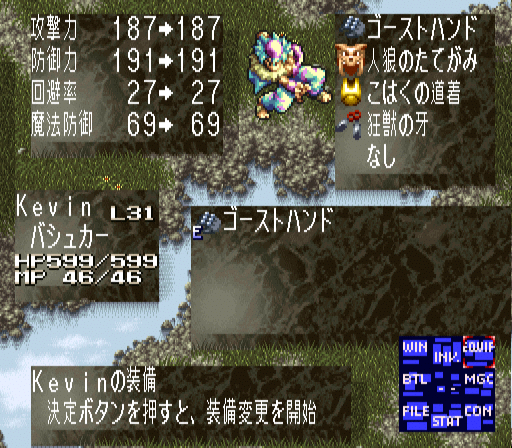
At first glance, the gameplay may seem a bit crude, consisting mainly of pressing the attack button like a frenzied hack-and-slash game, but it reveals some subtleties for those who fully invest themselves in it. While the technique based on attacking and dodging with the controller seems less viable over time, it is on the side of tactics, available in the options, as well as your art of war and your keen analysis of your opponents' strengths and weaknesses that skirmishes gain in value. Thus, a wise player will focus their offensive power on one monster rather than another and ask the artificial intelligence to provide offensive or defensive support, or to avoid exposing certain companions to close combat.
Moreover, the player can choose the level of special attacks for each character. With equal strength, duels can thus become very intense, requiring a certain tactical sense.
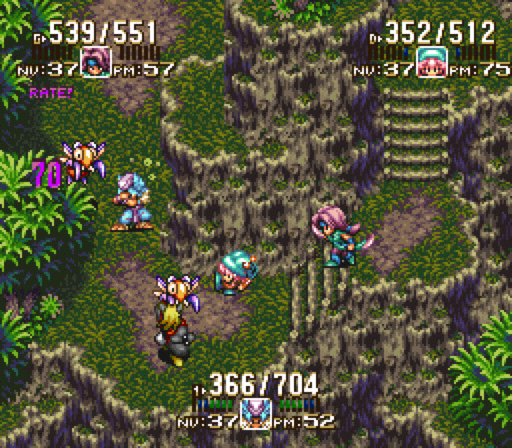
However, while magic can often be crucial, their executions, in addition to featuring stunning animations, disrupt the flow. These interruptions can even prevent the use of items or other spells, undoubtedly due to timing and priority issues. This hidden rule, not visible to the player, can be frustrating to grasp easily.
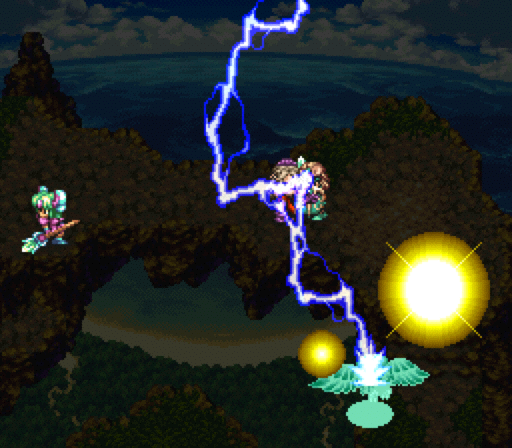
The world is quite rich, and exploring it is a pleasure thanks to ships, cannons, or even riding turtles and dragons in a flawlessly mastered 7-mode. Furthermore, there are no dead moments, and leveling is not mandatory to complete the adventure, although some sections are quite challenging.
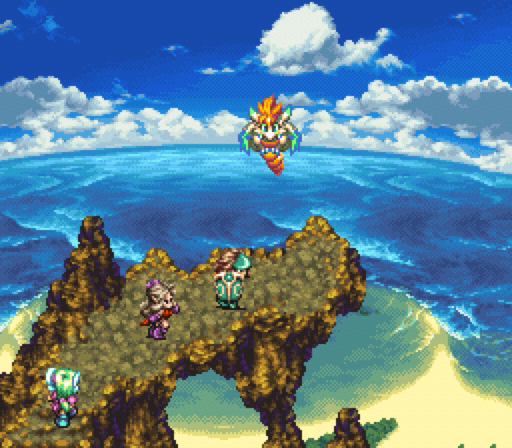
As you may have easily understood, there is little to criticize about Seiken Densetsu III. This sequel is nearly a complete success. With stunning graphics that do not cause lag, a plot offering multiple possibilities and a true challenge, characters as charismatic as they are endearing evolving at our discretion, music enhancing the atmosphere, and smooth controls for dynamic gameplay, this game is undoubtedly one of the best A-RPGs ever made and perhaps the best of the 16-bit era. While its original Japanese localization might have been a deterrent at release, now that translations are available, it would be sacrilege for a fan of the genre to miss out on this gem.
Where it fits in time
The whole timelineWhat came out and what happened around 1995.
-
CPS Changer
Console de salon · Capcom
-
Basilisk II opens up the 68k Mac
Christian Bauer’s free emulator brings 68000 Macintoshes back to life on other machines, ROMs and System 7 included.
-
CP System III (CPS3)
Arcade · Capcom
-
Apple buys NeXT
Apple acquires NeXT for $429 million. NeXTSTEP becomes the basis of Mac OS X, and Steve Jobs returns.
Play it on a Mac
1 Platform emulator
Show the 22 other emulators
An emulator being listed does not mean the game runs: every project keeps its own compatibility list.
Reply on the forum
A question or a hands-on report? Open the discussion on the forum.