Myth - The Fallen Lords
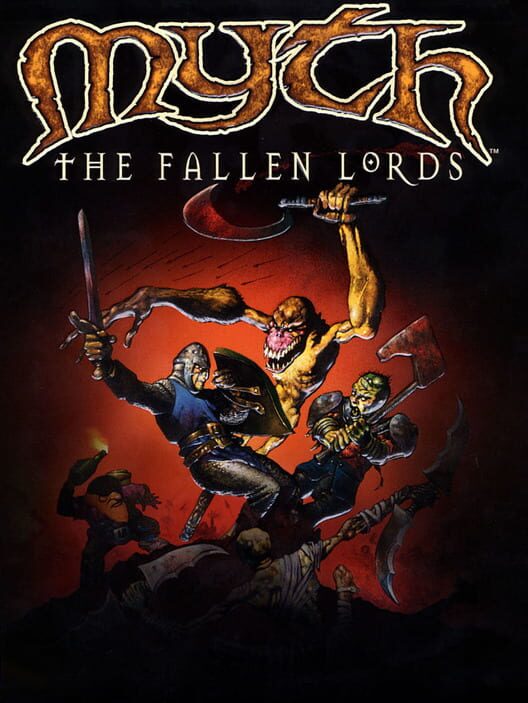
In 1997, Myth – The Fallen Lords revolutionized real-time strategy on Windows and Macintosh with 3D tactical combat, without resource management or base building.
Developer Bungie Publisher Bungie, Eidos Interactive (Europe)
After revolutionizing the FPS genre with Marathon and its two sequels, the company Bungie, known for its turbulent history, sought to reinvent itself by creating a new gaming style. From this desire came Myth, released in 1997, which would also be followed by two sequels.
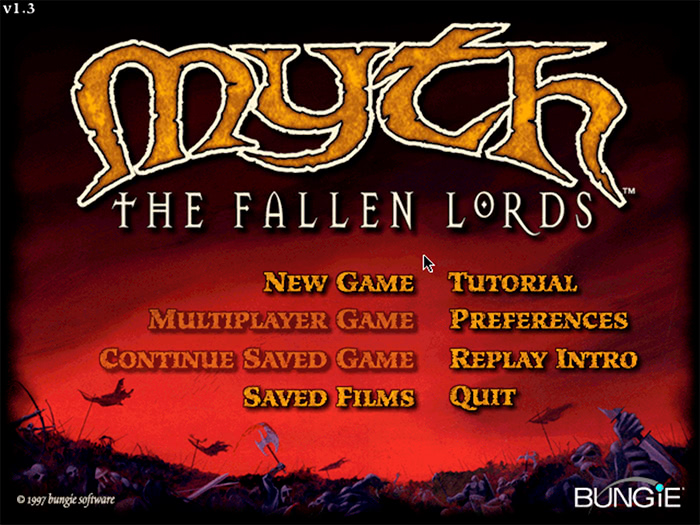
Myth is a real-time strategy game set in a medieval universe. Unlike Warcraft and Warcraft 2, released in 1994 and 1995 respectively, Myth allows you to stay constantly at the heart of the action by eliminating resource management, building, and construction. Although this may seem like a step backward, it is not. Instead of spending time on resource management, you must focus on the strategy to adopt and the proper positioning of your troops.
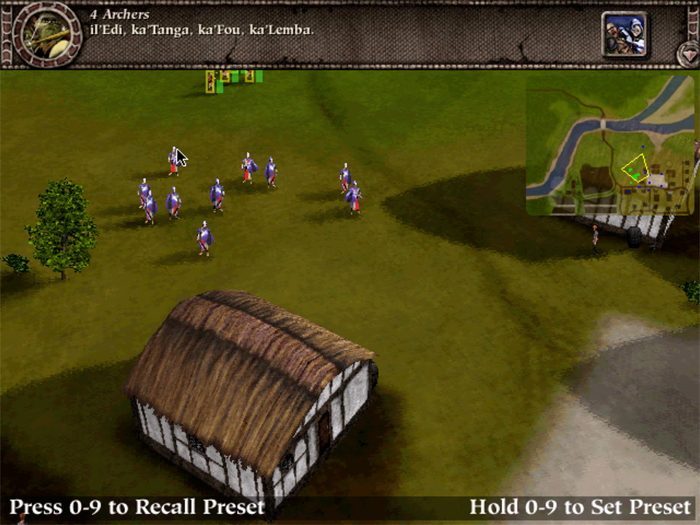
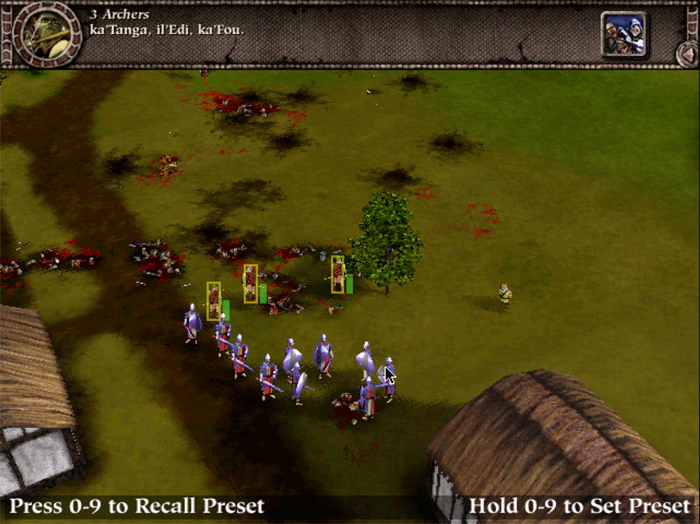
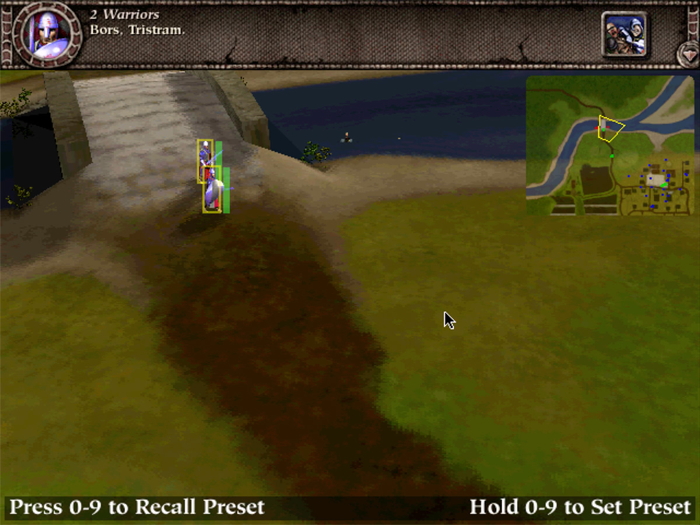
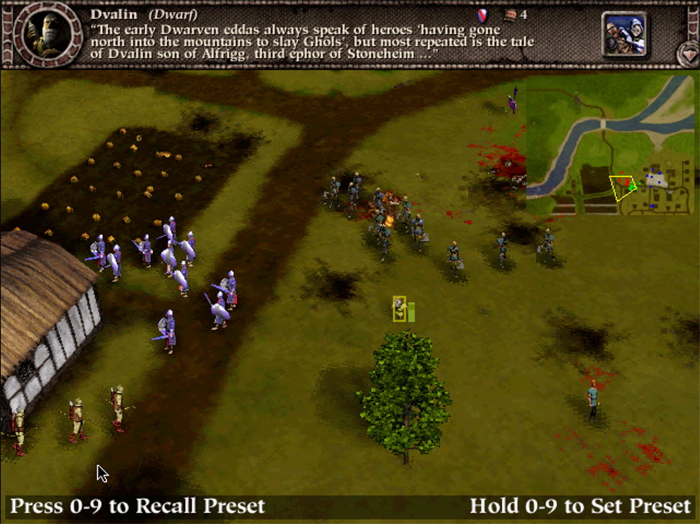
Intending to be more realistic than Blizzard's game, Myth also features a fully 3D universe, a major innovation for a strategy game. Scenes take place in hilly environments, plains, forests, along rivers, or near small villages, all meticulously modeled, especially considering the context of the time.
Only a few elements, such as trees, remain modeled with sprites, a necessary optimization to run on machines that were operating at a maximum of 300 MHz for the most powerful Macs, but most often between 150 and 200 MHz. Not to mention that at that time, AMD and Nvidia, although already existing, were still in their infancy. The first 3D cards were just beginning to emerge, and it was the Voodoo cards from 3DFX that dominated this very niche market. The game is indeed optimized for these cards, but it is no longer possible to enjoy them on our emulated machines.
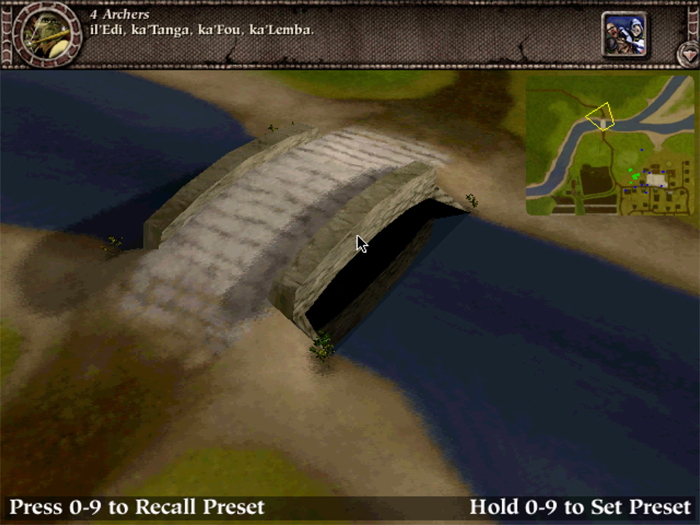
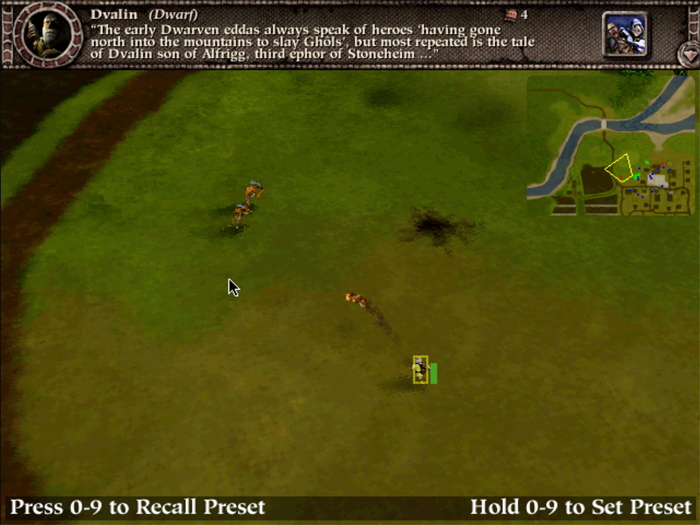
Without benefiting from graphical acceleration, the engine remains highly performant. While it is limited to a resolution of 640x480, it allows for smooth camera movement, and decorative elements such as bridges or houses are not exaggerated. It even manages to handle water reflections, weather conditions, or terrain deformations caused by mortar explosions. The character animations are simple, but they are more than enough to serve their purpose.
The maps are never enormous; they are actually rather small. However, they are large enough to accommodate our battles. Focusing on strategy, the game is rather slow. This allows time to find the best placement for our units. Since there is no resource management, there is obviously no possibility of obtaining reinforcements to attack in overwhelming numbers for an obvious victory, like in Warcraft. Units are primarily distributed at the start of the match, and one must pay attention, as it is rare to receive new ones during the game. Each new loss leads to an increasingly inevitable defeat.
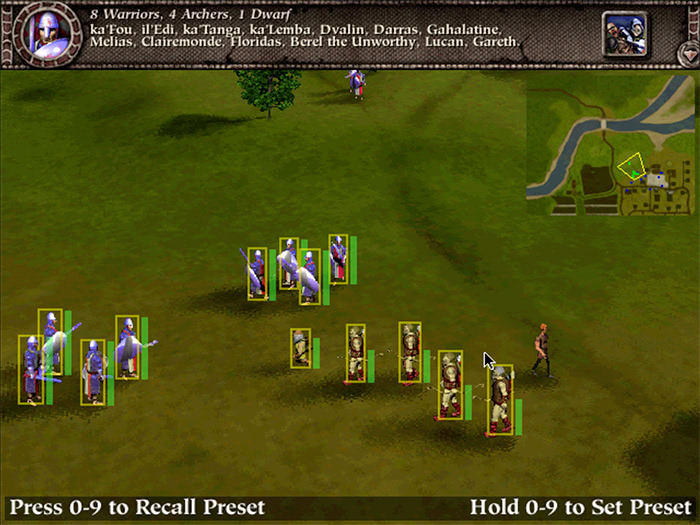
To push us to adapt, we never have many units at our disposal. We must accomplish our missions with just a few men. We must take advantage of every element of the scenery. By hiding behind trees or houses, forcing enemy troops to regroup, or crossing bridges.
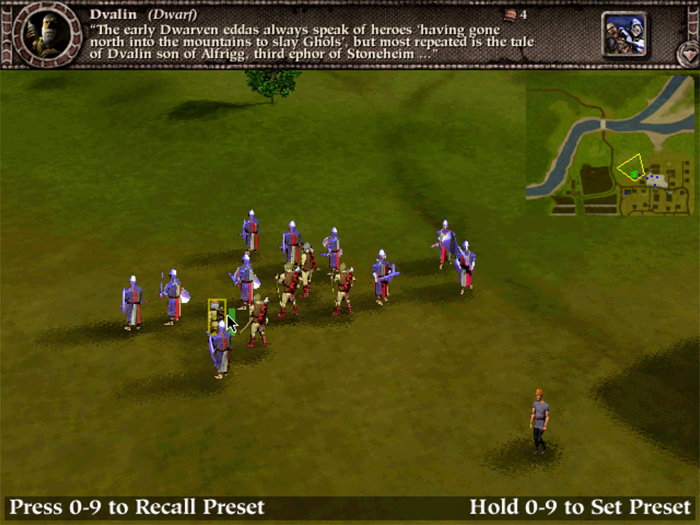
We will only have six types of units at our disposal to annihilate enemy armies. From the first mission, we are offered the basic units: the knight, a melee unit protected by armor, the archer, a ranged unit without armor and highly mobile. Finally, there is the dwarf, and his explosive equipment. Small and not very fast, he is nonetheless capable of wiping out an army of skeletons all by himself. Soon, the Companion will be available, allowing allied units to be healed.
The Berserker, who prioritizes power at the expense of his own survival, and the Forest Giant, a sort of Ent straight out of Tolkien's universe, will appear later.
Whether it's archers or dwarves, you'll have to be careful with their use. Friendly fire can damage your own troops, and during the first playthroughs, you will probably be your own worst enemy! This is why it's best to quickly adopt the training system, which allows you to place characters as desired, in line, in formation, in wide or tight ranks—there are many possibilities.
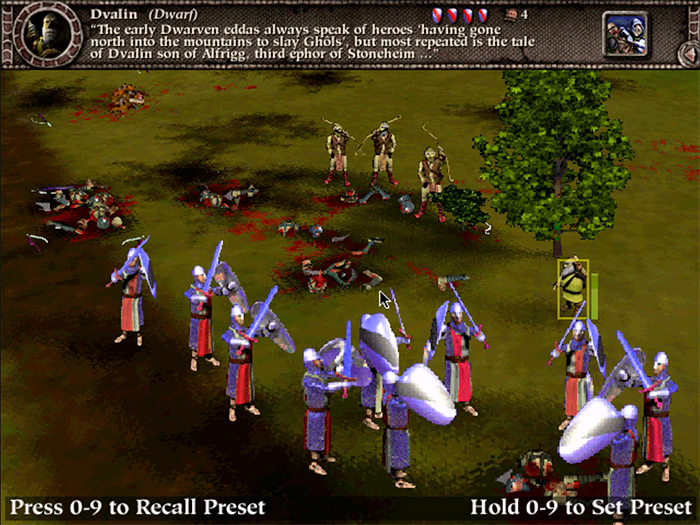
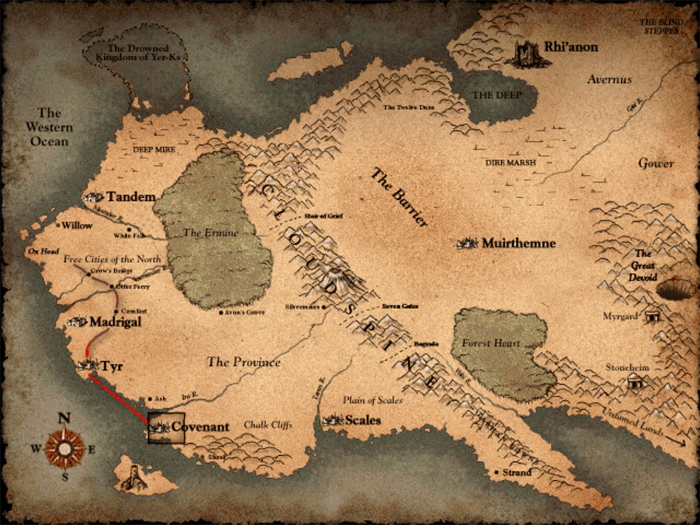
If you embark on this adventure, you will find 25 missions awaiting you, with varied objectives. All of this tells the story of reclaiming the land of men, after it was invaded by the undead a few years earlier. Although the plot may seem light, it holds up well and tells a delightful part of the story. Obviously, as you've understood, the game limits you to playing the role of men.
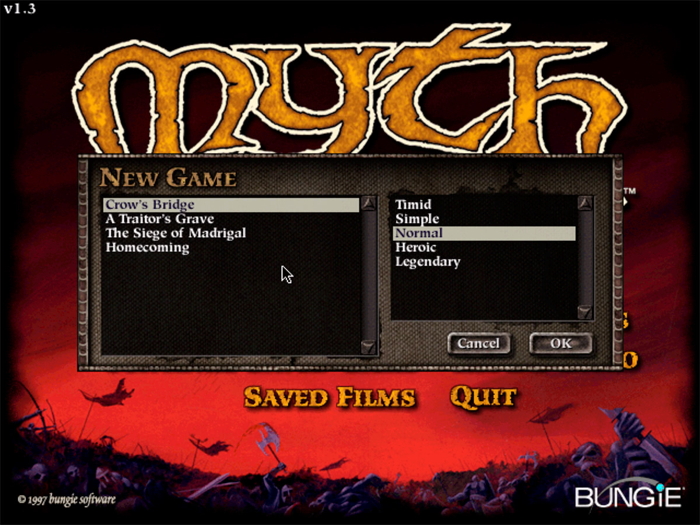
Myth offers 5 difficulty levels, but even the "Normal" level is a torment. I rarely saw a strategy game so difficult. As far as I remember, an update helps to better balance the game. It is therefore recommended to install the game's updates before starting.
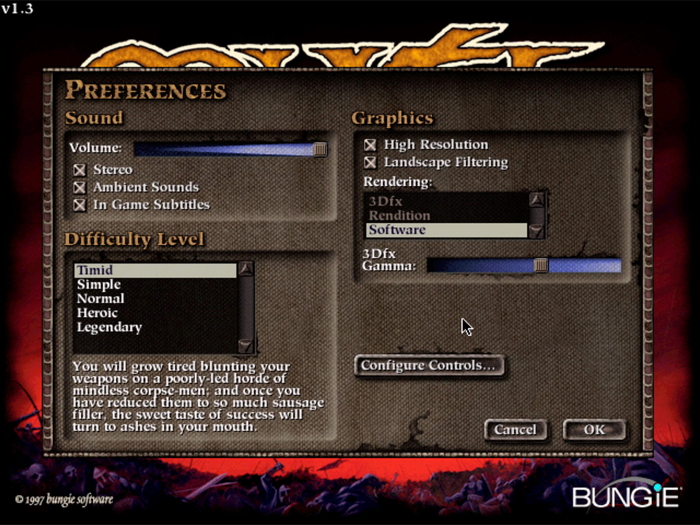
The game runs perfectly on SheepShaver, the Classic Mac emulator, on Mac OS 9.0.4. Obviously, only software rendering is available, and you don’t benefit from the graphics capabilities of the era's 3DFX cards.
A multiplayer mode is available, but despite our ability to network our Mac OS 9 systems, I haven't had the courage to test it.
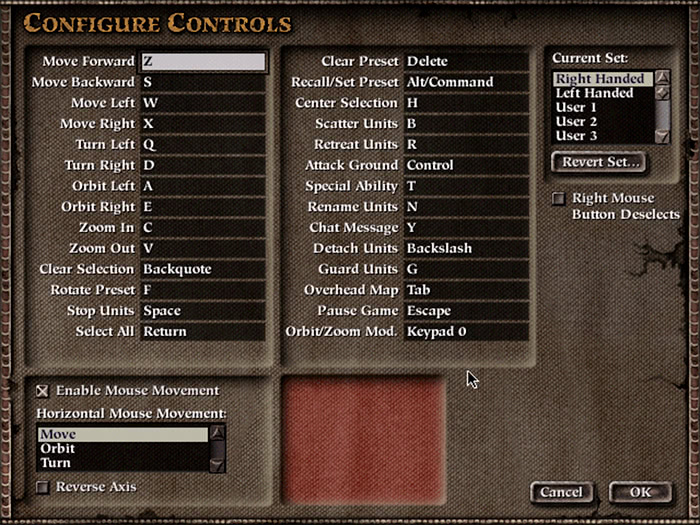
Note that the keyboard mapping is in QWERTY; I provide a screenshot of the settings to adopt in order to control the camera with maximum comfort.
Although the game, with its slowness and outdated graphics, has aged, it remains a monument of its time, thanks to one of the companies that was one of the greatest supporters of Mac gaming before its unfortunate acquisition. It is surprising to rediscover it with as much pleasure as back then. Perhaps the excellent memories it left behind have something to do with it.
Where it fits in time
The whole timelineWhat came out and what happened around 1997.
-
Basilisk II opens up the 68k Mac
Christian Bauer’s free emulator brings 68000 Macintoshes back to life on other machines, ROMs and System 7 included.
-
CP System III (CPS3)
Arcade · Capcom
-
MAME documents arcade cabinets
The Multiple Arcade Machine Emulator project sets out to preserve arcade hardware, game by game.
-
Connectix Virtual PC virtualises the PC on Mac
Virtual PC puts a complete PC in a Mac window, BIOS and disk included: emulation becomes a consumer product.
Play it on a Mac
1 Platform emulator
Show the 23 other emulators
An emulator being listed does not mean the game runs: every project keeps its own compatibility list.
Reply on the forum
A question or a hands-on report? Open the discussion on the forum.