Clock Signal (CLK)
Clock Signal is an open-source emulator for macOS 10.13 and later, compatible with Apple Silicon, supporting multiple classic microcomputers and consoles, including the Apple II, the VIC-20, and the ZX Spectrum.
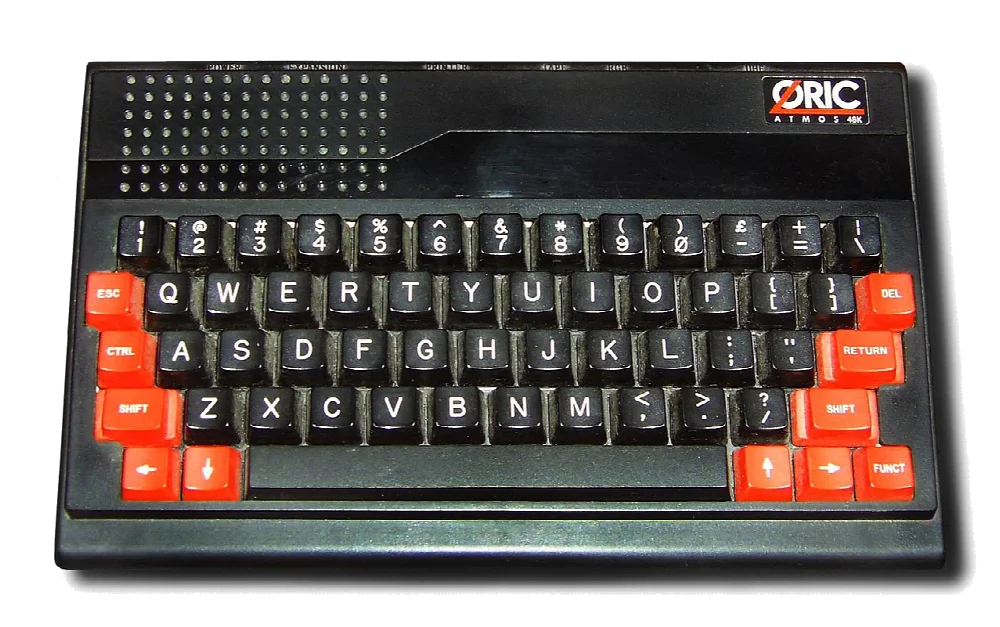
L'Oric Atmos est le deuxième ordinateur de la firme Oric. Commercialisé à partir de 1984, il reprend la base de l'Oric 1 en remplaçant son clavier par un modèle offrant un toucher plus conventionnel permettant une saisie plus rapide, et en corrigeant quelques bugs de sa ROM. Il sera élu ordinateur de l'année en 1984.
What came out and what happened around 1984.
Console de salon · Atari
Too many consoles, too many poor games: the market collapses, and the microcomputer takes over.
Computer · Hitachi
Computer · Amstrad
Computer · Eureka
Computer · Amstrad
Computer · Atari
After the power struggle with John Sculley, Steve Jobs leaves the company he co-founded and founds NeXT.
Clock Signal is an open-source emulator for macOS 10.13 and later, compatible with Apple Silicon, supporting multiple classic microcomputers and consoles, including the Apple II, the VIC-20, and the ZX Spectrum.
Oric emulates the Oric 1 and Oric Atmos computers on Mac, with support for Apple Silicon and Intel processors under macOS 10.14 or later.
Oricutron/Oriculator 1.2 emulates the Oric 1, Atmos, and Telestrat microcomputers, as well as the Pravetz 8D, on macOS using SDL and Universal Binary builds.