Warcraft: Orcs and Humans
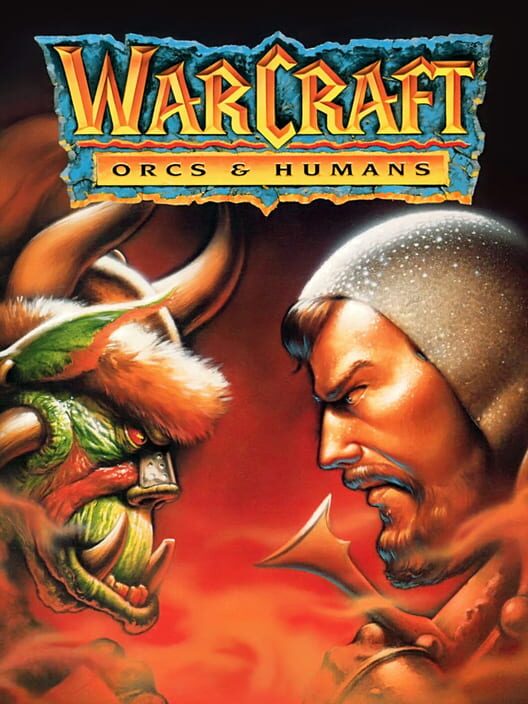
In 1994, Macintosh and MS-DOS hosted the two campaigns of Warcraft, pioneering the real-time strategy genre, where resource management underpins the orcish invasion or human defense.
Developer Blizzard Entertainment Publisher Blizzard Entertainment
Warcraft: Orcs and Humans was the first original game by Blizzard Entertainment and a true phenomenon that put the studio directly on the path to success. But more than just a game, it is now a standalone universe spanning multiple platforms, including a series of three strategy games, a collectible card game, an MMORPG, as well as books and a movie, telling a small part of the story of the Warcraft world.
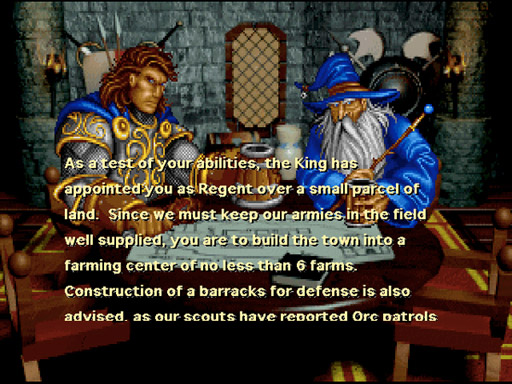
This world is set in an original heroic-fantasy universe, though heavily inspired by others such as Tolkien’s world or Warhammer. The game’s story unfolds on Azeroth through two campaigns: one for the Orcs, retracing their invasion, and one for the Humans, defending the territory, each offering a different perspective on the history.
Warcraft was also the game that launched the RTS (Real-Time Strategy, or real-time strategy game, abbreviated as RTS in French), as it is still known today. Unlike turn-based games such as Heroes of Might & Magic, players (human and AI) play simultaneously and in real-time.
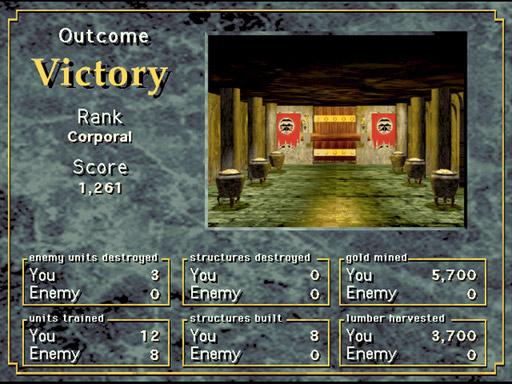
While many features were not yet present and only arrived over time with subsequent releases, it already established the foundations of modern real-time strategy games.
If you're a fan of modern RTS games, playing Warcraft can be frustrating: no production queue management, actions don’t always trigger automatic attacks, unit selection is cumbersome and limited to 4 at a time. But as I mentioned, the foundations are solid, starting with resource management—you’ll need to oversee the income of gold and wood gathered by your peasants—then the need to manage buildings, and finally your armed troops. Each mission has different objectives, but the principle remains the same: grow your base and your army to withstand attacks, then assault your enemies. With each new mission, you’ll discover new buildings and new units. In the first mission, you’ll only have infantry, followed by archers, priests, and so on. Don’t expect to "speedrun" the game—its pace is extremely slow. Each mission can take a significant amount of time, despite your best efforts to progress. This is likely what shocks most players in this first Warcraft. You’ve been warned! Graphically, Warcraft was a success for its time: while the resolution remains locked at 640x480—making it appear small on modern screens—the game’s design is beautiful, even refined. Character animations are well-done, though fluidity is lacking. It’s important to remember that memory was severely limited back then. In fact, the development team suffered for it: the original DOS version strained the system’s capabilities. The Mac version, despite its delayed release by nearly two years, also suffered from these limitations, despite the Macs of the time having far superior hardware. The game also includes the 3D cutscenes that helped establish Blizzard’s reputation over the years, adding to the gameplay experience. If today’s Warcraft graphics seem laughable, they were a true showcase of the company’s craftsmanship at the time.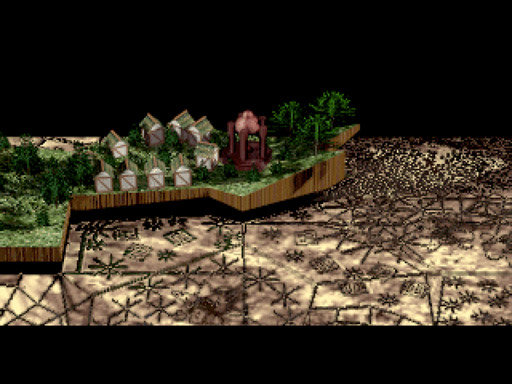
The interface, however, can appear quite austere. Today, everything is integrated, with the interface seamlessly blending into the game. In Warcraft, it’s very much old-school: square design, where every element has a clearly defined visible space, much like a game board.
Despite its pronounced archaic nature, Warcraft is a landmark every gamer should experience at least once. If you play World of Warcraft but have never tried strategy games, this is the perfect starting point! Just for the story alone, Warcraft and its two sequels are absolutely worth it—play them in order, of course.
Where it fits in time
The whole timelineWhat came out and what happened around 1994.
-
Amstrad NC
Computer · Amstrad
-
Executor, the Mac on a PC
ARDI releases Executor 1.0: a 68k emulator that reimplements the Macintosh Toolbox rather than the hardware.
-
CPS Changer
Console de salon · Capcom
-
Basilisk II opens up the 68k Mac
Christian Bauer’s free emulator brings 68000 Macintoshes back to life on other machines, ROMs and System 7 included.
Play it on a Mac
1 Platform emulator
Show the 23 other emulators
An emulator being listed does not mean the game runs: every project keeps its own compatibility list.
Reply on the forum
A question or a hands-on report? Open the discussion on the forum.