Super Metroid
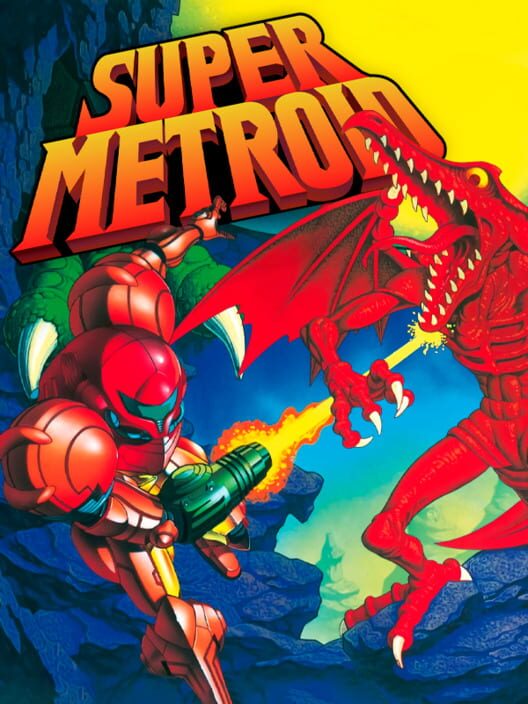
Nintendo Super Famicom, 1994: Super Metroid relies on a suffocating atmosphere, meticulous staging, and the exploration of an abandoned station before leading Samus to Zebes.
Developer Nintendo R&D1, Intelligent Systems Publisher Nintendo
My first encounter with the Metroid series took place in 2002. And here, I sense some experts raising their heads—they know exactly what I'm talking about.
A friend had brought their Game Boy Advance and Metroid Fusion, so I entered this universe through the most narrative-driven (and some would say directive) entry released at that time in the series.
Then came Metroid Prime. In one word: stunning. As I started the game, I realized the stories referred to older titles, prompting me to recall that my uncle had introduced me to a few games on his Super Nintendo, before finding a way to run them on his iMac G3. In the end, I ended up playing Zelda: A Link to the Past thanks to that. I thought I had seen it all.
And then I went back. And there I found a ROM labeled "Metroid." Super Metroid.
"It's an old thing, let's see what it's like." That was me, young and carefree.
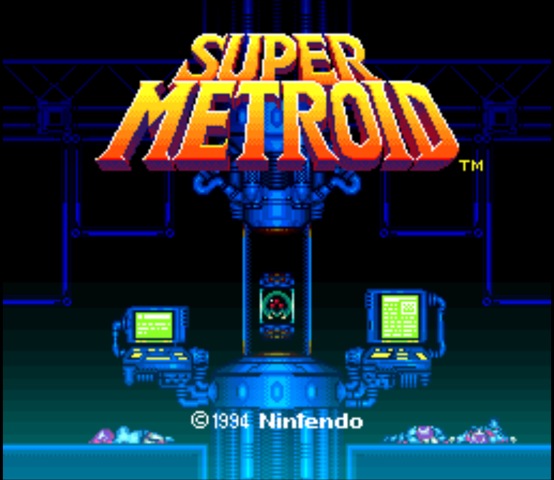
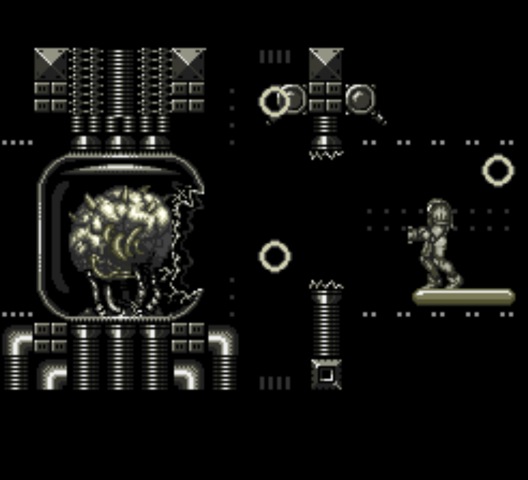
The menu starts with a suspenseful, oppressive atmosphere. Just a few words on a black background appear: 1994, and Metroid 3, followed by wide and close-up shots (with the means of the time) of scientists' bodies, before finally revealing the menu and its captive Metroid at the center.
Right away, the tone is set: this episode will give prominence to staging and details. And this is confirmed as soon as you launch the game, as an introduction serving as a quick summary and setting appears, featuring an English narrator—a first for a Metroid game.
Any player will find themselves hooked. The first level, a true echo of Aliens and its discovery of an empty station littered with bodies (on the scale of a room, don't overdo it), will complete the atmosphere setup. Then, with a countdown forcing you to flee—a classic in the series—the stolen Metroid will vanish before your eyes, carried off by Ridley.
Samus will therefore head to the planet Zebes, the setting of the first episode.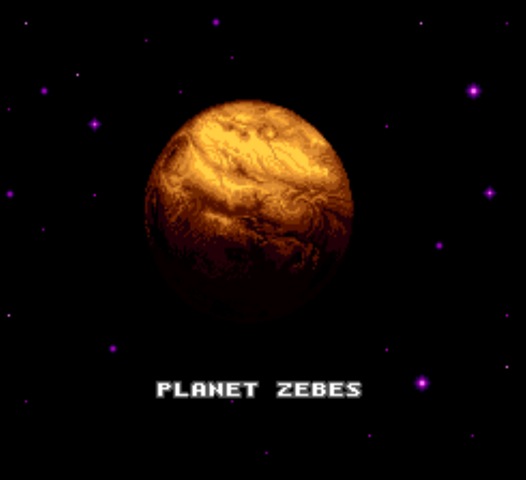
"Yeah, you're going to tell us again that Samus can roll up and shoot beams. I'm out. Hey. Stop. Sit down and listen: yes, Samus can roll into a ball to pass through tunnels, use all that in puzzles, which is a bit the trademark of the series anyway! BUT. Super Metroid combines all the equipment from the first two episodes. Adding even more. Here, the gravity suit will make its first appearance (to no longer be hindered in movements by liquids), as well as power bombs, super Missiles, speed boost (linked to the sprint key), the grapple beam (which replaces the spider ball from Metroid 2), and X-ray vision.
And there, does that calm you down?
Especially since all this isn't added to the cartridge just for show. Everything is useful and employs an impeccable level design. Movements are complicated by new types of doors, secret passages are more numerous and cunning, the manipulations required of the player are constantly new, and the worst part is that all this is often inaccessible at first, but visible (sharper eyes will see the richness of the secret passages in this episode).
No more empty wide corridors, place for passages full of tricks. And the genius of the work lies there: the player progresses through these large maps without needing an objective indicator.
I don’t speak of a well-trodden path because exploration is never easy, but the placement of upgrades and level design makes the game playable from start to finish while demanding a considerable yet rewarding effort, without being too challenging to frustrate even the most impatient players of today (a grumpy old player’s claim).
You progress room by room while always wanting to see more, and the items progress intelligently with the environment, a true delight!
Regarding the maneuverability of our Bounty Hunter, everything feels quite natural, even though the added inertia to movements (especially jumps) and diagonal aiming will require a bit of practice (but not much).
Unique to this game, the pause menu, in addition to the map, will show the equipment of the hunter and allow you to enable or disable each piece of equipment! A questionable good idea perhaps, as throughout the game, it’s mostly about disabling the High-Jump for the duration of a room that will be useful, mixing the beams is interesting but not mandatory (which would have been a good idea to create enemies requiring it, by the way).
In addition to this, there is the possibility in the main game menu to change the control settings, and Samus bends to our wishes in a labyrinth of Zebes that grows ever larger, which is not a bad thing.
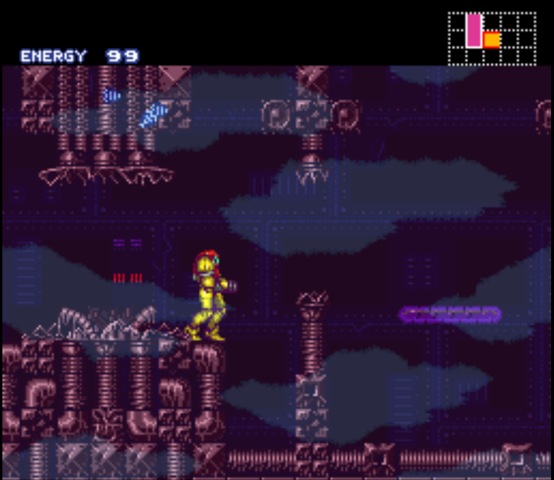
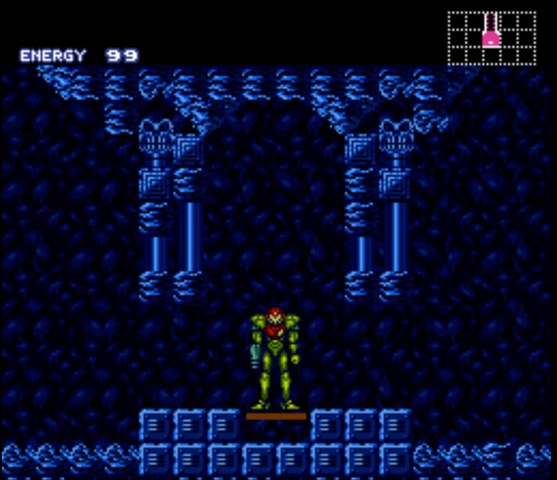
Add to that a richer universe, and Super Metroid becomes a little gem for fans: for example, the beginning of the exploration of the planet Zebes will take place in reverse order of its last appearance, dating back to Metroid 1. The player descends into the escape shaft connecting Tourian to Crateria, until finding the starting elevator from Metroid 1, and the location of the first item, the Morph Ball.
Here’s the translation:
And there, I’m shouting "genius" (without having the ice beam—ho ho ho!)
With this Metroid 3, Nintendo had indeed solidly cemented the universe: references to past episodes, all iconic items were present, the narrative was more developed at the start, revisiting Zebes’ structure from the first episode, but complexified for this one, while offering memorable bosses and passages (small example: the new area of a mysterious spaceship wreck)
Of course, nothing as extravagant as Final Fantasy’s universe. But in its own right, Metroid expanded quite well, and Super Metroid tells that story perfectly, never too much or too little.
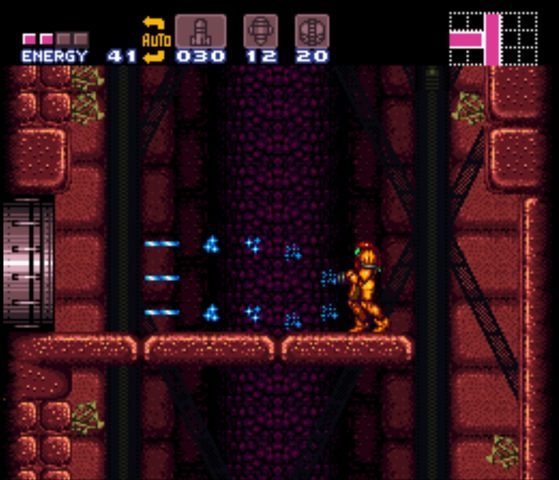
Visually, it’s a feast for the eyes. While Super Metroid isn’t the Super Nintendo game that makes the most use of background layers (an era where sprite depth was almost a religion), unlike Contra III or Donkey Kong Country, it still gives it a distinct charm. It’s often very simple (especially in the old Brinstar), but sometimes subtly progressive with a few background elements to suggest an endless, oppressive cave. And it works quite well! Where the game shines is in its scale: some bosses are so large that the entire screen isn’t enough to display them. And tracking everything becomes a challenge! The different zones of Zebes are quite varied—rock, jungle, lava, but also metallic or organic interiors, equally intriguing and unsettling. It’s a real pleasure to discover new areas throughout the game! Super Metroid also introduces mechanical and mystical elements from the lost civilization of the Chozo, which tie all these zones together into a cohesive whole, further strengthening the Metroid mythos. Because yes, it’s also the first in the series to mix up the map zones—no more "one elevator = one new area." What contributes even more to this grand atmosphere, by far, is the soundtrack. As for sound effects, Samus is very much alone against the world.
Only the sound of footsteps from her armor breaks the few natural enemy noises or some background elements. Super Metroid here establishes a player against the void, against the fear of the unknown already introduced with the very dark sets. And of course, the original soundtrack wonderfully accompanies all of this. When I say "wonderfully," it's not for nothing, as this music is considered one of the best from the 16-bit era. All the console's audio capabilities are used, from the lowest (the main menu theme, deafening and unsettling), to the highest (the music of the crushed ship, which plays with our nerves, with drums and pauses, followed by ascents to the treble). The melodies are just as successful, like the lower area of Brinstar, with its melancholic and frightening tone at the same time, the Norfair theme and its unshakable percussion rhythm, or still the fanfare of Samus Aran. Here too, the sense of solitude inherent to Metroid is magnified, and so well that with the classic jingles of new objects and save points, Kenji Yamamoto signs a simply monstrous soundtrack.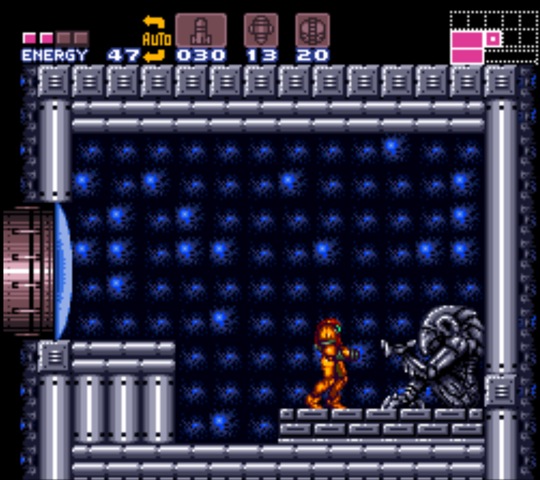
Super Metroid thus took all the best ideas from the original Metroid and its lesser-known sequel on Game Boy to transport them to an entirely different level. That of the near-perfection of the genre. Never had a Metroid been told and built so well, and the impact it had on fans of the genre at its release is surely a large part of its "legend." For an era where criticism is easy toward "rehashed" content, Super Metroid would today be burned in flames. But it's so good, and in my opinion, one of the best 2D/adventure/shooter/platformer productions of all time. Proof of this, Retro Studio, with Metroid Prime which I mentioned at the beginning of this article, draws heavily from this episode.
As they say, it's in the old pots that the best soup is made.
(I would add that even if Nintendo overlooks the 25th anniversary of this series to focus on Zelda, don't hesitate to go listen to the fan-made remix and reorchestration project "Harmony of a Hunter," created for this anniversary—it's a treat).
Where it fits in time
The whole timelineWhat came out and what happened around 1994.
-
Amstrad NC
Computer · Amstrad
-
Executor, the Mac on a PC
ARDI releases Executor 1.0: a 68k emulator that reimplements the Macintosh Toolbox rather than the hardware.
-
CPS Changer
Console de salon · Capcom
-
Basilisk II opens up the 68k Mac
Christian Bauer’s free emulator brings 68000 Macintoshes back to life on other machines, ROMs and System 7 included.
Play it on a Mac
1 Platform emulator
Show the 14 other emulators
An emulator being listed does not mean the game runs: every project keeps its own compatibility list.
Reply on the forum
A question or a hands-on report? Open the discussion on the forum.