SNK or Arcade at Home

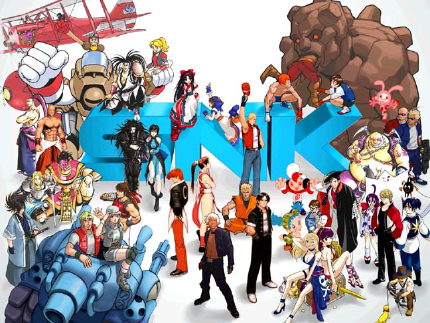
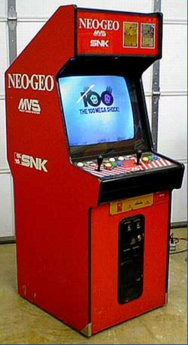
At the end of the 1980s, consoles and microcomputers entered households, and arcade games no longer interested anyone to the point that large American arcade halls closed their doors. Yet, during this difficult period, SNK decided to focus on arcade games. In 1989, SNK announced their new arcade gaming system, the Neo Geo MVS (Multi Video System).
The SNK system is based on the innovative and well-thought combination of the two most famous microprocessors of the computer history of the time: the Motorola 68000 CPU (12 MHz) 16-bit, which was at its peak and equipped many Macintosh computers, Atari ST, Amiga, Sega Megadrive, and many others, and the Zilog Z80 CPU (4 MHz), one of the most sold 8-bit processors in the world and the best exploited, found in an impressive number of machines, starting with the MSX, since the action takes place in Japan. Using these two chips was a double interesting move. Not only were they powerful and cost-effective, but their programming was no longer a mystery to anyone due to their widespread use. Regarding display, the system offered a resolution of 320x224 with 4096 colors from a palette of 65536, sufficient for the arcade games of the time, based on scrolling and sprites. The sound system featured 16 channels, combining FM synthesis and digitized sounds. However, the RAM was very limited with only 64 KB.
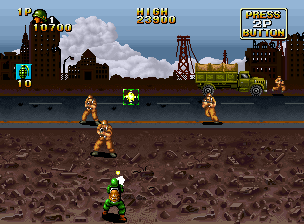
The MVS arcade cabinets were therefore equipped to handle real hits with a robust configuration, with RAM being the only weak point. Its use was said to be simple thanks to the proven development knowledge that facilitated the work. Now, what the new system expected were titles worthy of its hardware capabilities. These games are highly anticipated and release shortly after.
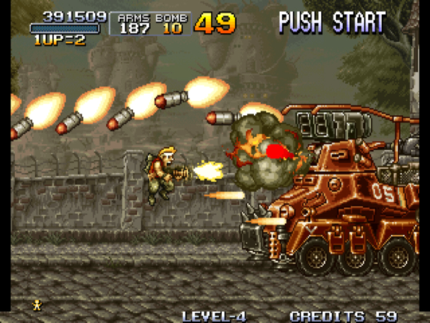
The result lives up to expectations, and the MVS brings back the competitive arcade cabinets of the past. Everything is enchanting: speed, graphics, sound, animation, and so on. The enthusiasm for arcade games resurfaces, and SNK's cabinets become unbeatable from then on.
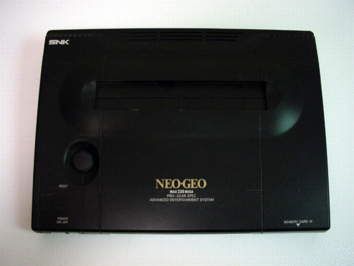
SNK could have easily settled for this incredible success, but the company then made a bold move and surprised everyone by announcing the upcoming release of a new console, the Neogeo AES (Advanced Entertainment System). It's important to understand that in 1990, producing a 16-bit home console was not easy. The 8-bit queen, the NES, sees her younger sister, the SNES, released on the market, and her main competitor, the Megadrive, had already been out in Japan for two years. That's when SNK realized the marketing move to make: building a home console using the same hardware as the MVS (99% compatible) and thus turning it into a home arcade cabinet, something unprecedented at the time. No wonder the announcement thrilled many players waiting eagerly for the machine's release.
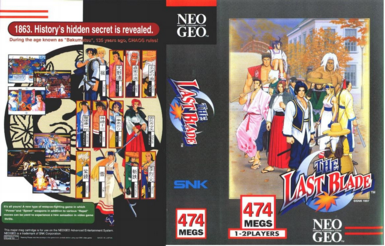
Unfortunately, this dream remained within reach only for the wealthiest players or those willing to tighten their belts, as the console was sold in the USA for $650, equivalent to 735 euros (or 4800 francs at the time). For the French, it would only be available through import in Paris. Once again, one might think that saving a bit more than usual could make it possible, but the price of the games was also very high compared to those of other consoles, and import obviously didn’t help.
In fact, the Neo-Geo had very little RAM, and game cartridges were packed with ROMs that were extremely expensive, with game prices around $200 in the USA and €300 in France (approximately 2000 francs during that period).
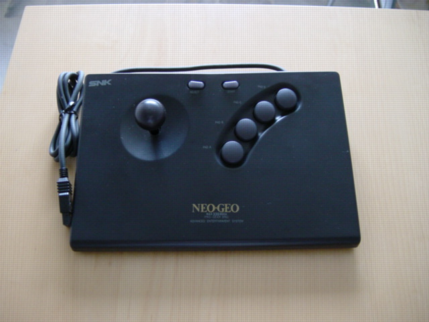
The Neo-Geo still had the merit of having hardware almost identical to the MVS arcade cabinets and a joystick with an arcade stick that was never matched, solid, allowing players to feel like they were really in front of a real arcade machine.
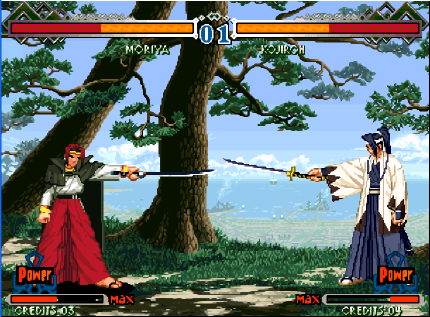
We don’t know the exact sales figures, and it’s difficult to assess whether the Neo-Geo was successful or not. However, it did revolutionize the video game world. What is certain is that the MVS system remained the undisputed master of the arcade halls at that time and had no real competitor.
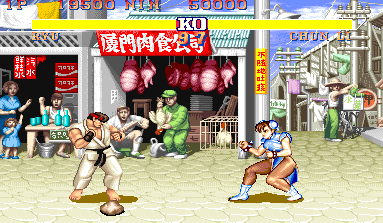
But in 1992, a company named Capcom released an arcade cabinet called Street Fighter II, which seriously competed with SNK’s games. SNK realized that its dominance was threatened and decided to redouble its efforts in 2D fighting games, adding 3D effects.
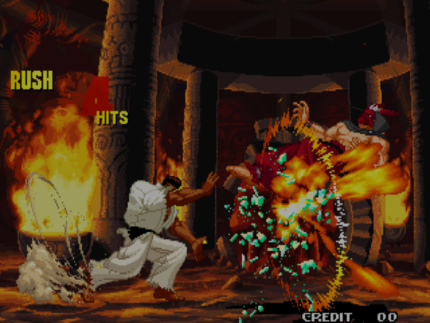
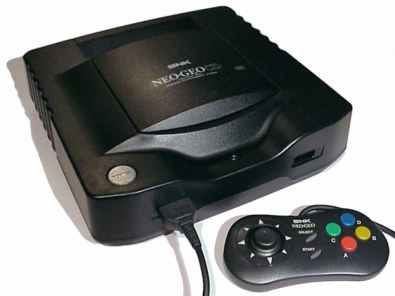
SNK, having quickly reacted to the threat, remained the leader for a good period in arcade games, closely followed by the looming Capcom. Wanting to firmly establish itself in the console market, SNK decided to re-release the Neo-Geo, this time with a CD-ROM drive to sell games at a much lower price.
The Neo-Geo CD, released in 1994, also had extraordinary potential but was still sold at an exorbitant price, $300 in the USA and nearly €450 (approximately 3000 francs) in France. Moreover, the CD drive was only single-speed, causing shockingly long loading times before and during gameplay. The Neo-Geo CD this time around is a failure.
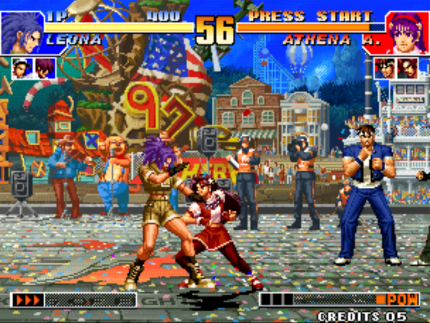
In 1998, nearly ten years later, the MVS continues to captivate in arcade halls, and for good reason: Metal Slug and King of Fighters seem to give the MVS a new lease on life. On top of that, SNK achieved the biggest coup in video game history—never before had a machine remained at the top for a full decade.
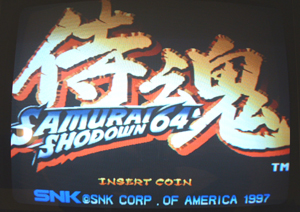
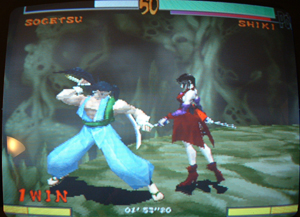
But the time has come to turn the page on the MVS, and SNK embarks on the Hyper Neo-Geo 64 project, a new version of its system based on a custom 64-bit RISC processor designed exclusively for arcade halls. This time, the system includes more RAM than necessary and, of course, is capable of running 3D games. Yet again, this won’t be a success: sales will not follow, and very few games will be released.
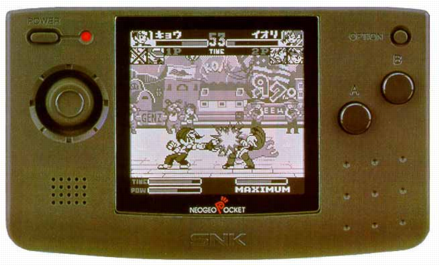
Wanting to bounce back, SNK then decides to enter the portable console market and compete with the Game Boy, the dominant force in that sector. The Neo-Geo Pocket is technically far more powerful than Nintendo’s portable and its monochrome screen is less power-hungry, allowing for a twenty-hour battery life. The games are very well made, and all of SNK’s biggest hits are included. However, this console will not achieve the success it was seemingly destined for. Indeed, the monochrome version is released in 1998 at the same time as the Game Boy Color. SNK will hastily release a color version, but it’s too late—the damage is already done.
The console turns out to be a true portable arcade machine, still the only one today, thanks to its games of impeccable quality for the majority, but especially thanks to its stick, whose maneuverability and durability remain unmatched on portable consoles.
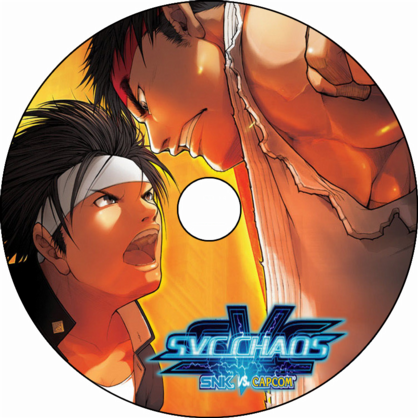
Through ups and downs, SNK tried to survive, even going as far as partnering with its direct competitor Capcom by creating games blending the licenses of both companies. SNK nearly disappeared in 2000, but was acquired by Azure, which unfortunately went bankrupt the following year. It was then that Playmore acquired all of SNK's major licenses.

SNK as fans knew it is gone, but the company achieved one of the greatest masterstrokes in video game history by creating a true arcade console that saw productions for its hardware nearly twenty years later.
Reply on the forum
A question or a hands-on report? Open the discussion on the forum.