The Birth of the Amiga

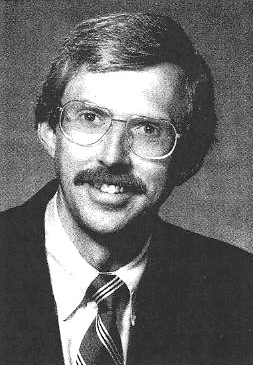
In the early 1980s, a small team named "Hi-Toro" (comprising RJ Mical, Dave Morse, and Carl Sassenrath) wanted to spend 7 million dollars on some project. All three decided to found Amiga Computer Inc., a computer company.
 |  |  |
The name Amiga was found in a thesaurus to convey a sense of friendship. Moreover, with such a name, their company would appear before Apple and Atari in alphabetical lists.
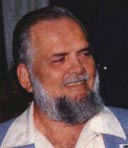
Later, they were joined in this adventure by various people, including Jay Miner, who had previously worked at Atari.
Their first goal was to create the best gaming console of the time, as the market was very attractive in 1982. However, Jay Miner and the technicians had other ideas in mind, which they kept secret.
Before anything else, they wanted to establish a presence and a name in the market, which they did by selling peripherals and software purchased from other companies.
The bulk of their distribution was the Joyboard, a type of game controller placed on the floor and manipulated to activate the base switches. They offered a skiing game and several sports games.
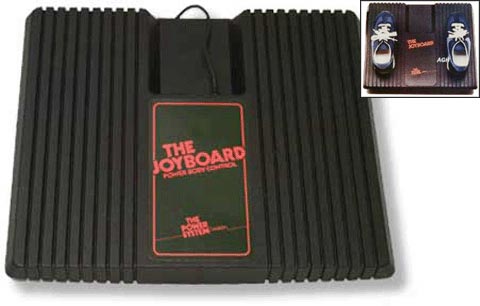
The staff at Amiga Computer Inc. particularly enjoyed a game called Zen Meditation, where one had to sit on the Joyboard and try to remain perfectly still.
This is where the term Guru Meditation (Amiga error message) originates.
The Amiga's price was initially planned to be $400, but it quickly rose to $600. To stay afloat, something more appealing than just a gaming console was needed...
Moreover, in 1983, the video game industry experienced a massive crash. This is when the ideas secretly kept by Jay Miner and colleagues became interesting: a keyboard, connectors, a floppy disk drive, and hard disk controllers.
The Amiga was born...
The Amiga was secretly introduced at the January 1984 CES. The software was completed in 10 days, just before the CES opening, and worked perfectly in simulation. However, on the hardware side, things were different. It wasn't in silicon. The custom chips were actually electronic cards placed vertically around a central core. This machine was called the "Lorraine Prototyp".
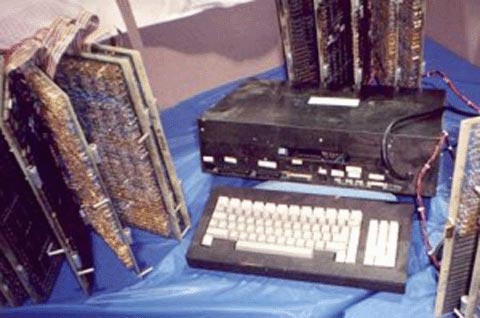
They worked frantically until the last minute. Just before the CES opening, their efforts were rewarded: the Amiga worked. They could offer private demos. The Amiga made a huge impression, which is why the marketing team was very optimistic. Throughout the show, technicians worked tirelessly on the machine, creating the famous demo "Boing".
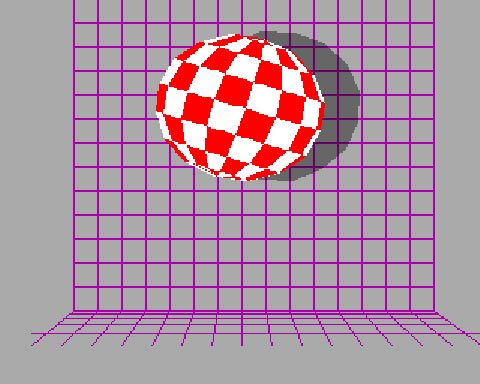
All this work came at a cost, and after the CES, Amiga Inc. was heavily in debt. It all cost much more than the initial $7 million. Despite the success at the show, investors did not commit. And new funds were urgently needed.
However, Amiga Inc. managed to hold on until the June CES. At that time, the Amiga was functional and in silicon. During the entire trade show, attendees watching the demonstrations searched everywhere for the machine displaying those images.
From that moment on, money began to flow in and the media's interest in the Amiga grew. Several people were hired. However, despite the influx of money, the company struggled to stay afloat. To successfully transition the project to distribution, 50 million dollars would have been needed. Amiga Inc. did not have that amount, and the end of the adventure loomed. Nevertheless, everyone persevered, accepting to work without pay, even going as far as mortgaging their belongings. This was not enough.
They then contacted various companies (including Sony and Apple), without success.
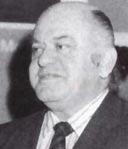
Finally, it was Jack Tramiel (Atari) who offered them 1 million dollars and a month of negotiation. Knowing Amiga Inc.'s difficult situation, he offered the small sum of 98 cents per share. The money was spent in a day.
Three days before the end of the negotiations, Commodore (CBM) called. Two days later, Amiga Inc. was acquired by the latter for 4.25 dollars per share and also repaid Atari.

Commodore had finally found a way to make the transition to 16/32-bit after the success of the Vic20 and C64.
A few months later, Atari released its first 68000-based machine with a mouse, icons, and windows, the 520 ST...
What you need to know is that Jack Tramiel, before joining Atari, was at Commodore. It was he who insisted on the Amiga. But after some disagreements with Commodore, he left for Atari with only the memory of the Amiga plans and not the originals of these plans. That’s why the Atari ST was merely an approximate "clone" of the Amiga.
Commodore then provided the Amiga development team with funds, the opportunity to work on Sun workstations, and cutting-edge hardware.
Eager to see the results of his investment, Commodore refused the additional 18 months the developers requested to complete the system.
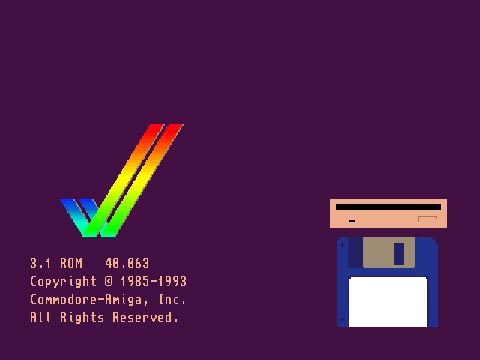
Thus, the Amiga 1000 was released in 1985 with the Kickstart (the equivalent of a PC BIOS) on a floppy disk, allowing for easy updates, as version 1.0 was incomplete and buggy.
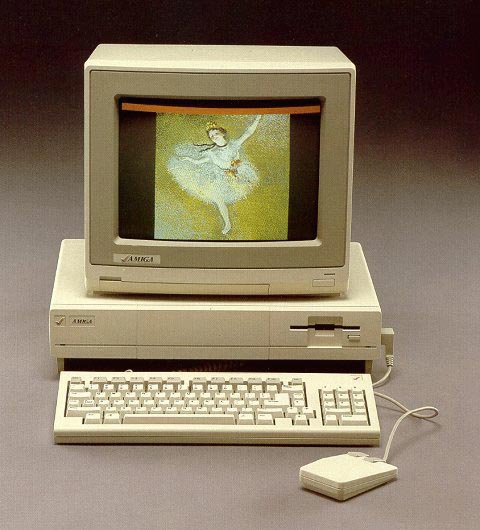
In 1987, the Amiga 2000 was released from the factories, followed shortly after by the famous Amiga 500.
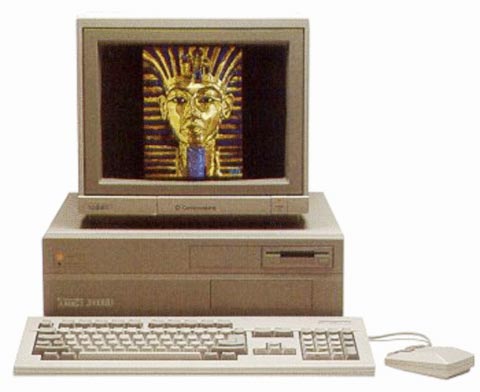
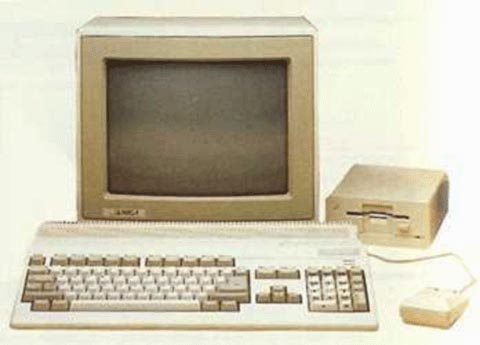
In 1988, Atari filed a lawsuit against Commodore, claiming to have funded the research of Amiga Inc. The court ruled in favor of Commodore.
In 1990, the Amiga 3000 was released and it was the first 32-bit system.
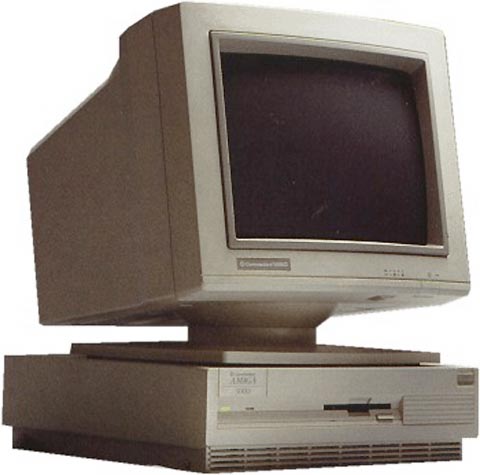
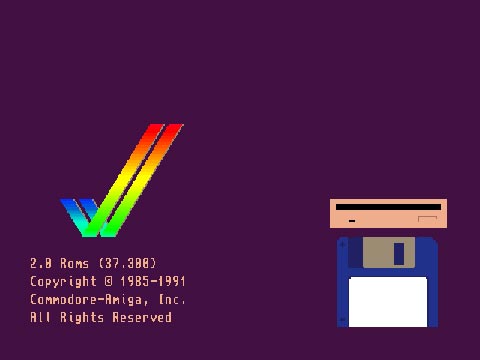
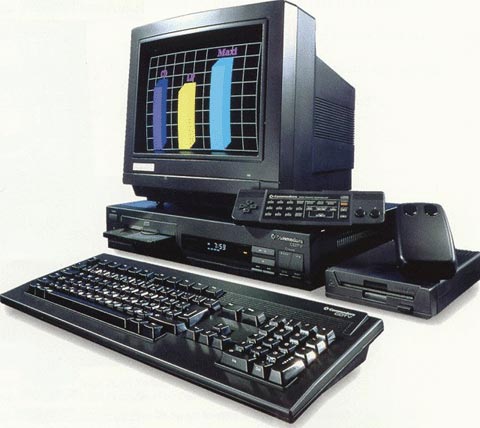
The CDTV was launched in 1991 and quickly proved to be a commercial failure.
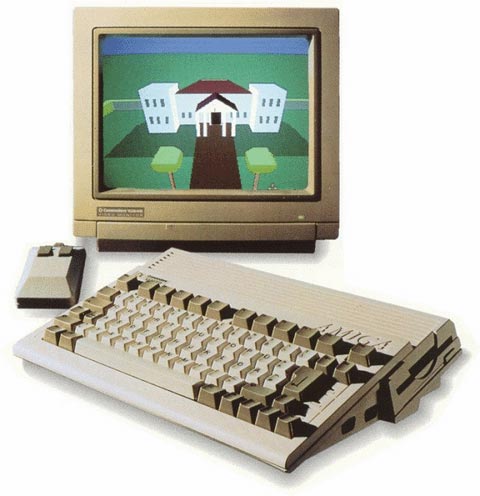
In 1992, the Amiga 600 and Amiga 1200 were released.
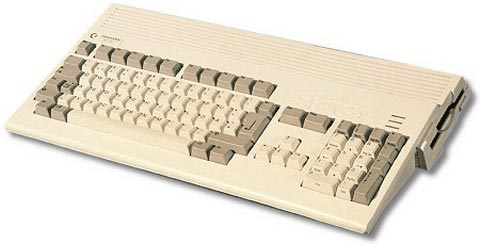
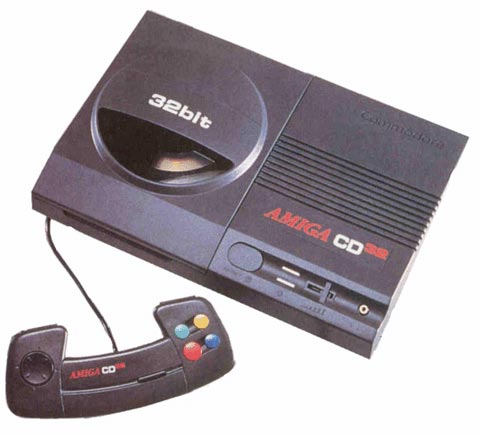
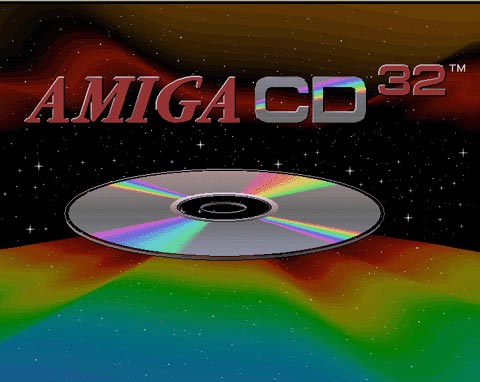
In 1993, Commodore's last machine was released under the name Amiga CD-32.
I haven't listed all the models released here, but only the main ones.
By the end of 1993, CBM's accounts showed a deficit of 197 million dollars. Commodore was officially declared bankrupt in April 1994.
Since then, many companies have been interested in Amiga technology, but nothing has borne fruit so far.
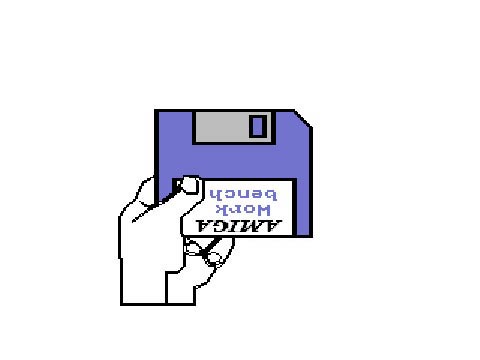
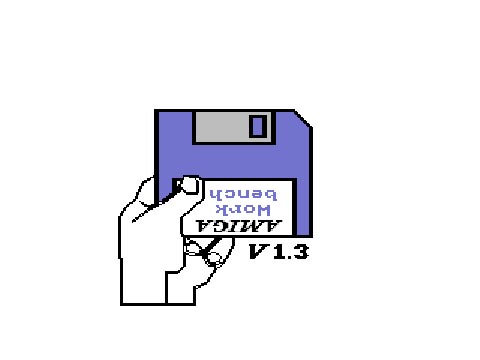
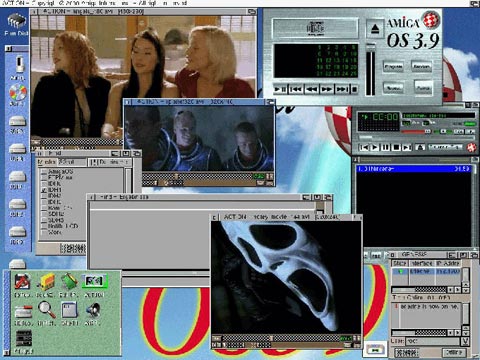
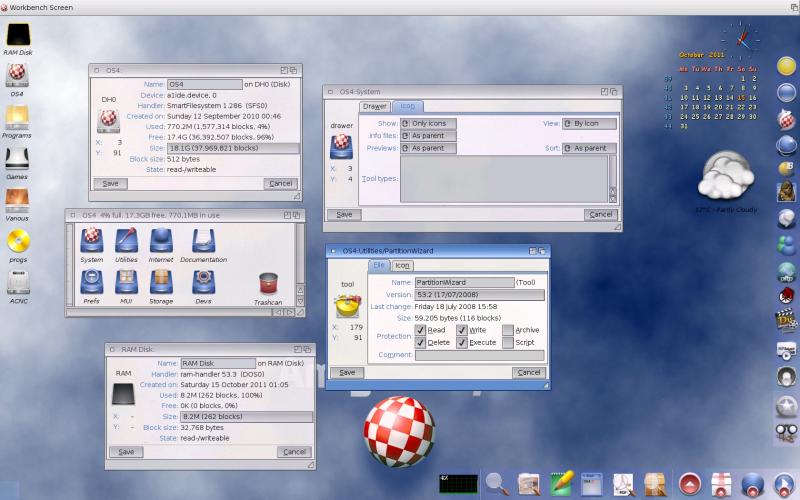
The Amiga operating system is called Workbench (or AmigaOS).
It was the first described as 'preemptive multitasking'. An operating system is considered multitasking when it allows running multiple applications simultaneously. Preemptive means, by definition, a multitasking operating system that can stop any application at any time to pass control to the next one. For information, preemptive multitasking only appeared on Macintosh with... macOS X.
Here are three screenshots, the first with Workbench version 1.2, the next with version 3.9, and the third in 4.1.
The latest stable version is version 4.1 (Update 2) released in 2021. And yes, the Amiga world is not dead...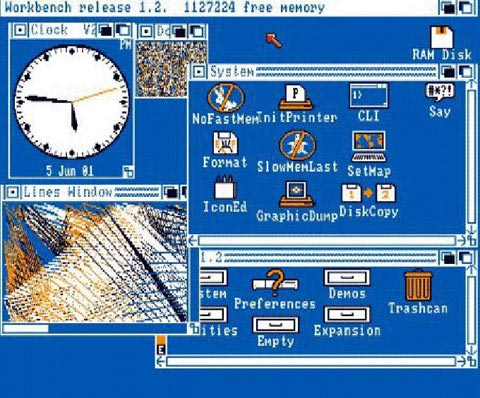
I will now present a small technical sheet of the famous Amiga 500 (probably the best-selling Amiga of all time):
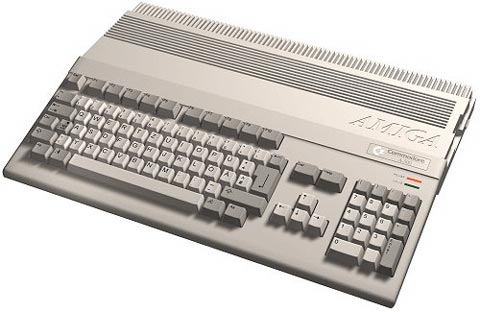
| Amiga 500 Specifications | |
|---|---|
| Release Year | 1987 |
| Microprocessor | Motorola 68000 at 7.14 MHz |
| Chipset | Original (OCS) |
| Graphics Capacity | 320200 or 320256 in 32 colors out of 4096 640200 or 640256 in 16 colors |
| Kickstart | 1.2 then 1.3 |
| ROM | 256 KB |
| RAM | 512 KB chip |
| Extensible RAM to | 1 MB (internal) / 32 MB (via external expansion port) |
| Sound | 4 channels, 8 octaves |
| Floppy Drive | 880 KB |
| Connectors | 1 ventral port for memory expansion |
| 1 lateral ZORRO II expansion connector | |
| 2 DB9 joystick connectors | |
| 2 Cinch audio connectors | |
| 1 external drive connector | |
| 1 RS232C serial interface connector | |
| 1 Centronics parallel interface connector | |
| 1 RGB connector, 1 composite video Cinch connector | |
| 1 power connector | |
Reply on the forum
A question or a hands-on report? Open the discussion on the forum.