Microsoft’s Masterstroke with Bungie: A Bittersweet Victory

1990
Going back in time, it's 1990. Bungie releases its first game, exclusively for Mac, Gnop! which won't be remembered. The following year, the studio releases "Operation Desert Storm", then "Minotaur" in 1992. With this game, Bungie begins to gain a small reputation, despite the secrecy surrounding the Mac world and its limited player base.

1991 - 1993
Another year passes, and in 1993 Bungie releases its first FPS: Pathways into Darkness. While it isn't of exceptional quality, far surpassed by its competitors, it does have the merit of honoring video games on Mac, just like its previous titles.
1994
1994 will be the year of recognition, as Marathon becomes available exclusively for Mac. The game, of rare quality as you can read in my retro-review, will be a true phenomenon on our platform. It will truly be "the game that PC users might have envied us… if only they had known about it".

Indeed, back then as a kid in the schoolyard, everyone was talking about DOOM, then a bit... of DOOM, and sometimes just a little... of DOOM. In short, players looking for some action turned only to the reference of the time (and rightly so, as the game is excellent). But when I said, "Yes, DOOM is good, but Marathon is just way better," all my friends would look at me with round eyes.
Unfortunately, despite high-quality software and games, the Mac, already not in good shape, continues to lose ground since Steve Jobs left Apple. This won't benefit the studio at all.
1995 - 1996
Bungie will nevertheless capitalize on this success with Marathon 2 and Marathon Infinity, two sequels directly in the lineage of the first episode, developed over the next two years.
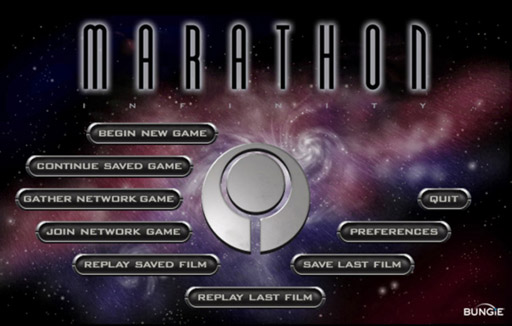
The success of Marathon and its sequels is such that the engine is used to create other games (on Mac): Prime Target and Damage Incorporated.
In 1996, Bungie brings Abuse to Mac, delivering a version better than the original by taking advantage of every quality of the Mac. With this "run'n'gun," Bungie continues its upward trajectory.
1997 - 1998
This period marks the end of Mac exclusivity (even temporary) and the arrival of a new license. To cast some shadow over Blizzard and the Warcraft series, Bungie releases Myth in 1997 and Myth II in 1998. Technically, once again superior, the studio focuses on 100% action, no resources to manage, and technologically advanced features, such as an adjustable 3D camera and deformable terrain. The Myth series still pleases players and fans of the studio on Mac, whose offerings are still not on par with the PC world. Both games release simultaneously on both platforms. Another success for Bungie.
1999 - 2000
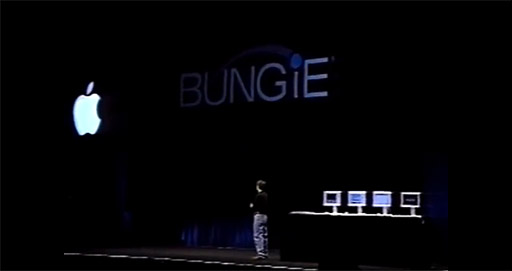
Macworld Expo 1999, Apple, which with Steve Jobs' return regains its prestige, announces the PowerMac G3, the new generation of professional machines featuring a graphics card, at the time on par with what was available on PC. At the end of the keynote, two titans are unveiled: Quake III Arena by ID Software, creators of DOOM, presented by John Carmack himself, and Halo: Combat Evolved for Bungie, presented by Jason Jones. The two games mark a certain renewal of gaming on Mac to the delight of Mac players.
In 2000, Bungie releases Oni, an action/adventure video game once again meeting players' expectations. But all eyes are on the studio's other project, that project which, for fans—including myself—was the spiritual successor to Marathon.
This was promising with the arrival of new ideas that would become standards (like Marathon at the time), such as the use of vehicles.

But for all those who had been eagerly waiting, the year 2000 was the year of tragedy! While Halo was supposed to release in June, Microsoft acquired Bungie, turning it into one of its subsidiary studios under Microsoft Game Studios.
2001
Although the game was still expected to release on Mac and PC, everything changed with Microsoft's announcement of the Xbox! The American PC giant entered the home console market. And the company intended to capitalize on its acquisitions: Halo became an exclusive title for the console.
In one move, Microsoft's acquisition of Bungie was a double-edged sword—hard for its competitors of the time.
A nasty blow for Mac users, now deprived of Halo, a long-awaited game that had been an integral part of the Mac community since Marathon. Mac users already didn’t hold Microsoft in high regard, and this only fueled everyone’s hatred toward the creator of Windows.
However, a smart move for Microsoft, offering its newly launched console a legendary character: Master Chief, who would face off against Nintendo’s Mario, Sega’s Sonic, and Sony’s Crash Bandicoot for the young PlayStation.
2003
Halo 2 was about to release on Xbox when Halo finally arrived on Mac, thanks to MacSoft. Unfortunately, it was already outdated upon release.
2003 – Present Day
Many Halo installments followed, dominating the Xbox lineup, but no other entry besides the first ever released on Mac.
In 2007, Bungie regained its independence (and lost the Halo license in the process, which remained with Microsoft). While the studio diversified by releasing games on Xbox and PlayStation, including Destiny, the Mac universe that once launched and supported it no longer seems to be part of its DNA. Sad.

Reply on the forum
A question or a hands-on report? Open the discussion on the forum.